What if the "touch test" you used to check your kitchen cabinets is actually the reason your new finish chips within a month? It’s a frustrating mistake that many homeowners make. You assume that because the surface isn’t sticky, it’s ready for heavy use. However, understanding the critical difference between cabinet paint curing time vs drying time is the only way to protect your kitchen investment. While drying is merely the evaporation of liquids from the surface, curing is the deep chemical transformation that creates a factory-hard finish designed to last for decades.
Cabinet Painting Service Areas in Denver & Surrounding Cities, Cabinet Refinishing in Denver County, Boulder CO,
Arvada, CO, Wheat Ridge, CO,
and Castle Pines CO. Englewood CO. Castle Rock CO, Centennial CO.
Cabinet Painting in Arapahoe County, CO
Including Centennial, CO, Greenwood Village, CO,
Cherry Hills Village, CO,
and Aurora, CO.
We understand the inconvenience of a kitchen that’s off-limits. You want a durable, chip-resistant result without the confusion of conflicting timelines. With over 45 years of experience in cabinet refinishing Denver homes, we’ve mastered how our local climate impacts these processes. Denver’s low humidity causes paint to dry quickly, but the cure phase requires patience to reach maximum durability. This guide provides clear instructions on how to handle your cabinets during this window. You’ll gain the confidence that your investment is protected against Colorado’s extreme temperature swings and high altitude UV rays.
Key Takeaways
- Understand that “dry to the touch” is simply the start of the process, while full curing is the chemical bond that ensures a lifetime of durability.
- Learn the specific differences in cabinet paint curing time vs drying time to prevent premature wear and protect your professional kitchen update.
- Discover how Denver’s low humidity and high altitude impact solvent evaporation and why expert application is required for a smooth, level finish.
- Follow a proven 30-day protection timeline to navigate the window between initial drying and the final, factory-hard state of your cabinets.
- See why industrial-strength coatings and professional spray systems provide a chip-resistant surface that standard consumer paints cannot replicate.
Dry vs. Cured: Understanding the Two Critical Stages of Cabinet Refinishing
Mistaking "dry" for "cured" is the fastest way to ruin a professional finish. When we perform Cabinet Refinishing Denver projects, we educate homeowners on this distinction immediately. You need to understand the relationship between cabinet paint curing time vs drying time to protect your investment. A dry surface is merely the first step; a cured surface is the goal. The goal is a factory-hard finish that resists oils, water, and impact for decades. If you treat dry paint like cured paint, you’ll likely end up with chips and scratches before the first month is over.
To keep things simple, here are the two definitions every homeowner should know:
- Dry to the touch: This occurs when the solvents or water in the paint evaporate, leaving a skin on the surface. It feels smooth, but it’s still soft underneath.
- Fully cured: This is the point where the coating reaches maximum hardness and chemical resistance. The paint has finished its internal transformation and is no longer vulnerable to pressure or moisture.
The Drying Phase: What to Expect in the First 24 Hours
The drying phase is the "tack-free" window. During this time, dust and pet hair will no longer stick to the surface. In the Denver area, our low humidity often accelerates this stage. Professional spray application dries significantly faster than brushed-on DIY paint because we apply a thinner, more consistent film. However, you must watch out for "blocking." This happens when doors feel dry but still stick to the frames if closed too early. We use professional masking and spacers to prevent this, ensuring the finish remains flawless during the initial set.
The Curing Phase: The Chemical Transformation
Curing is far more complex than simple evaporation. It involves the chemical process of curing, where resins and binders knit together at a molecular level. This creates a durable, plastic-like shell that resists water, oils, and physical impact. While standard air-dry paints might take weeks to harden, our industrial-grade professional coatings are engineered for superior performance and faster stabilization. This phase is critical for resisting the daily wear and tear of a busy kitchen. Without a full cure, the paint remains a soft film that can easily peel or indent under pressure. Our 45+ years of experience ensures that we use the right systems to achieve this factory-hard result every time.
Why Proper Cure Time is the Secret to a Durable Finish
A 20-year finish doesn’t happen by accident. It’s the result of chemical bonds and professional patience. While a DIY fix might look acceptable for two years, professional Cabinet Refinishing Denver ensures a factory-hard shell that withstands daily use. The difference lies in the balance between adhesion and cohesion. Adhesion is how well the paint sticks to the wood. Cohesion is how well the paint molecules bond to each other. Understanding the timeline for cabinet paint curing time vs drying time is an investment in a finish that lasts decades rather than months. If you rush this phase, you risk turning a premium renovation into a temporary aesthetic fix.
The Role of Professional Preparation
Quality results start long before we trigger the spray gun. At Painting Kitchen Cabinets Denver, we follow a meticulous preparation system that includes thorough cleaning, industrial sanding, and professional masking. Removing years of kitchen grease and old lacquer is essential. This allows the new industrial-strength coating to anchor itself into the wood fibers. Industrial sanding provides a superior profile compared to hand-sanding; it ensures the finish doesn’t just sit on top of the surface. Factors Affecting Curing Time such as film thickness and surface temperature are carefully managed during this stage. Our process ensures that once the coating reaches full hardness, it’s virtually inseparable from the cabinet.
Common Failures Caused by Rushing the Cure
Rushing back into your kitchen too soon leads to avoidable damage. We often see specific failures when homeowners ignore the cure phase. These issues compromise the integrity of the work and the value of the home. Common problems include:
- Handle Peeling: Skin oils from your fingers can penetrate uncured paint around handles, causing the bond to fail prematurely.
- Hardware Indentations: Re-installing hinges or pulls too early can leave permanent marks in the soft resin that never go away.
- The Permanent Stick: Door bumpers can sink into a soft coating, creating a "glue" effect that pulls the paint off the frame when you open the door.
Using your kitchen too early turns your cabinets into a magnet for damage. Fingernails can easily gouge an uncured finish, leaving scars that are difficult to repair without a full respray. We provide clear guidance to ensure you get the most out of your Cabinet Painting Denver service. Taking the time to let the resins fully stabilize ensures your kitchen resists the daily impacts of a busy household. Our 45+ years of experience has proven that the wait is always worth the result.
Factors That Impact Your Cabinets’ Drying and Curing in Denver
Denver’s unique high-altitude environment creates specific challenges for any Cabinet Refinishing Denver project. The local climate directly dictates the cabinet paint curing time vs drying time. While a national blog might give general advice, the Mile High City requires a specialized approach. Our low humidity and thin air mean that coatings react differently here than they do on the coast. Understanding how these variables interact is the only way to ensure your kitchen update doesn’t fail prematurely.
Denver’s Low Humidity: A Double-Edged Sword
In Colorado, humidity levels frequently drop below 20 percent. This causes paint to "skin over" almost immediately. While this prevents dust from sticking, it can lead to "flash drying." If the surface dries too quickly, the paint doesn’t have time to level out, which results in a textured, orange-peel look. Painting Kitchen Cabinets Denver prevents this by using professional-grade retarders. These additives slow down the initial drying phase just enough to allow the coating to flow into a smooth, factory-like finish. We also adjust our specialized spray equipment to account for the thinner Denver atmosphere. This ensures a consistent film thickness that promotes an even, deep-tissue cure.
Ideal Conditions for a Factory-Like Finish
Maintaining the right environment inside your home is vital for the chemical cross-linking process. We recommend keeping your Denver home at a consistent 70°F during the first 72 hours. Temperature swings are common in the Rockies, but a steady indoor climate ensures the resins bond correctly. Cold nights can halt the curing process entirely, leaving the finish soft and vulnerable to damage.
Consider these environmental factors for a successful outcome:
- Temperature Control: Aim for a range of 65°F to 75°F. Sudden drops in temperature can compromise the coating’s stability.
- Managed Airflow: A gentle breeze helps solvents evaporate. Avoid high-powered fans that can blow dust or pet hair into the soft finish.
- Dust Mitigation: Keep the kitchen area sealed and traffic-free for at least the first 48 hours to protect the wet film.
Seasonal differences also play a role in your project. During a dry Colorado winter, we focus on preventing the air from becoming too parched. In the summer monsoon season, we monitor the brief spikes in moisture that can cloud a finish. Our 45+ years of experience in the Denver area allows us to anticipate these shifts. This expertise ensures your Cabinet Painting Denver investment achieves the hardest, most durable finish possible. Mastering the cabinet paint curing time vs drying time in this climate is what separates a professional result from a DIY failure.
Living with Freshly Refinished Cabinets: The 30-Day Protection Plan
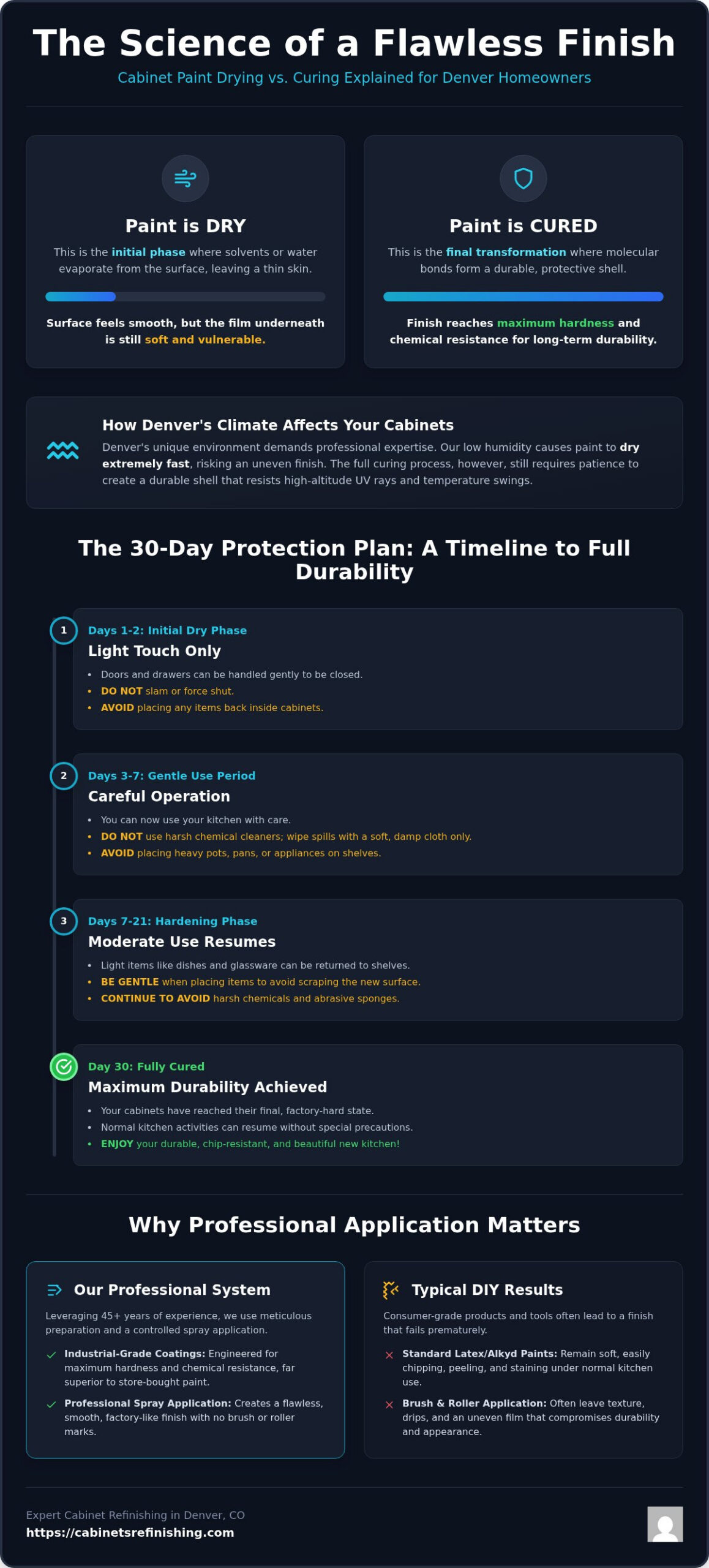
Protecting your kitchen investment requires more than just professional application. Once we complete your Cabinet Refinishing Denver project, the clock starts on a critical 30-day window. To ensure your kitchen update remains flawless, you must respect the cabinet paint curing time vs drying time. While the surface feels dry within hours, the internal resins are still knitting together. We provide this specific timeline to help you navigate the hardening phase without causing permanent damage to your new finish.
The First 72 Hours: Hands Off
The first three days are the most vulnerable stage for your cabinets. During this window, we recommend a total "hands off" policy. We leave professional masking in place on floors and appliances until the tack-free state is fully achieved. It’s vital to avoid high-moisture activities during this time. Don’t run a dishwasher on a steam cycle and avoid boiling large pots of water directly under upper cabinets. Excessive steam can soften the surface skin before it has a chance to bond to the wood. This is the period where the coating is most susceptible to "blocking" or sticking to the frames, so we use specialized spacers to keep everything protected.
Weeks 2 through 4: Gentle Integration
After the first 72 hours, you can begin light use of your kitchen. However, you must follow the "Handle-Only" rule. Train everyone in your household to use the hardware pulls and knobs exclusively. Never pull on the painted edges of the doors to open them. Your skin oils can penetrate the finish while it’s still in the "green" phase, leading to premature wear. For cleaning, use water only. Do not use Windex, bleach, or any abrasive sponges for at least 30 days. If you have a spill, blot it gently with a soft microfiber cloth; never scrub the surface.
You should also be careful with door bumpers and shelf liners. We install specific bumpers that won’t melt into the coating, but you should wait the full 30 days before adding your own adhesive liners or heavy organizers. If you notice a "sticky" spot when opening a drawer, contact us immediately rather than forcing it. This patience ensures the resins reach their maximum hardness. For a finish that stands up to the demands of a busy household, contact the experts at Painting Kitchen Cabinets Denver to schedule your professional consultation. Our 45+ years of experience ensures your kitchen receives a factory-hard result that lasts for decades.
Professional Coatings vs. DIY: Why Expert Application Matters
Many homeowners believe that a high-end "cabinet paint" from a local hardware store is identical to professional materials. This assumption often leads to disappointment. Consumer-grade products are formulated for easy application by beginners, but they lack industrial durability. When you compare cabinet paint curing time vs drying time, the difference between DIY and professional results becomes clear. Professional coatings reach a level of chemical hardness that retail paints simply cannot achieve. We use industrial-strength materials that create a permanent bond. This ensures your finish doesn’t peel under the stress of daily use.
Industrial Coatings for a Factory-Hard Result
The coatings used by Painting Kitchen Cabinets Denver are engineered for maximum chemical resistance. These products have a higher "build" than standard paints. This means they leave behind a thicker, more resilient film of solids after the solvents evaporate. This high-build quality is what creates that smooth, factory-hard feel. It’s a superior alternative to cabinet replacement because it provides a new-furniture look at a fraction of the cost. These industrial resins are designed to withstand the heat, moisture, and oils found in every Denver kitchen. This creates a surface that is easy to clean and resistant to impact.
Our specialized spray application ensures this coating is applied flawlessly. DIY projects often involve brushes or rollers, which leave texture and uneven layers. An uneven film causes the finish to cure at different rates. This leads to soft spots and early failure. We apply a consistent, thin layer that allows the entire surface to stabilize evenly. This precision results in a chip-resistant finish that lasts for decades. It’s the only way to achieve the smooth, non-DIY look that modern homeowners demand.
The Value of a Local Denver Authority
Hiring a licensed, detail-oriented expert in Denver, Colorado, eliminates the guesswork. With 45+ years of experience, we’ve developed a proven system tailored to the local environment. We understand how Denver’s atmosphere affects the cabinet paint curing time vs drying time for every project. A DIY mistake usually results in a sticky, failing finish that requires professional intervention to fix. Choosing an experienced professional protects your investment and increases your home’s value. Schedule your free in-home estimate with Cabinet Painting Denver today!
Protect Your Kitchen Investment with Professional Expertise
Achieving a factory-hard finish requires more than just picking a color. It demands an understanding of the relationship between cabinet paint curing time vs drying time. While your cabinets may feel dry within hours, the full chemical bond takes up to 30 days to reach maximum hardness. Respecting this timeline prevents chips and ensures your kitchen stands up to daily life in Colorado. This patience is the final step in securing a durable, professional result.
With over 45 years of specialized experience, Painting Kitchen Cabinets Denver provides the industrial-strength coatings and meticulous preparation needed for lasting results. We serve the entire Denver Metro area, from Boulder to Highlands Ranch, delivering a superior alternative to cabinet replacement. Our proven spray application system handles the unique challenges of Denver’s altitude and low humidity perfectly. We take pride in our craftsmanship and guarantee a finish that looks and feels like it came straight from the factory.
Ready to start your transformation? Request a Free Consultation for Professional Cabinet Refinishing in Denver today. We look forward to helping you create a beautiful, durable kitchen that you’ll love for decades.
Frequently Asked Questions
How long do I actually have to wait to use my cabinets after they are painted?
You should wait at least 72 hours before beginning light use of your kitchen. While the surface feels dry within hours, the finish remains soft for several days. We recommend a "hands off" policy for the first three days to prevent indentations. Full durability is achieved after the 30-day window. Understanding the cabinet paint curing time vs drying time ensures you don’t ruin the finish before it reaches its maximum chemical hardness.
Why do my cabinet doors feel sticky even after they are dry?
This sensation is known as "blocking" and occurs when the paint has dried but hasn’t fully cured. During the curing phase, the resins are still knitting together. If you close doors too early, the pressure causes them to fuse to the frame. We use specialized spacers and professional-grade coatings to minimize this issue. Patience is required until the coating transforms into a hard, non-tacky shell that resists sticking.
Can I speed up the curing time of my cabinet paint with a heater?
You should avoid using space heaters or high heat to force the process. The best environment for curing is a consistent 70°F with gentle airflow. Excessive heat can cause the surface to "flash dry" while the layer underneath remains soft, leading to cracking or poor adhesion. In Denver, we manage the environment to ensure the chemical cross-linking happens evenly. Sudden temperature spikes often compromise the long-term stability of the industrial-strength coating.
When is it safe to clean my newly refinished cabinets with soap and water?
It’s safe to use mild soap and water only after the full 30-day curing period has passed. During the first month, the finish is still hardening and can be damaged by chemicals or abrasive sponges. If you experience a spill during the initial weeks, blot it gently with a soft, damp microfiber cloth using water only. Avoid scrubbing the surface, as this can leave permanent marks in the soft resin before it fully stabilizes.
What happens if I put my cabinet hardware back on too soon?
Re-installing hardware too early will result in permanent indentations or peeling. When the resin is still curing, it remains soft enough to compress under the pressure of a tightened screw or hinge. This often causes the paint to squeeze out from under the hardware or bond to it. If you ever need to remove the hardware later, it might pull the paint off with it. We handle the timing of re-assembly to protect your investment.
Does Denver’s dry climate help or hurt the paint curing process?
Denver’s arid climate is a double-edged sword for the curing process. Low humidity speeds up the initial drying phase, which helps keep dust out of the wet film. However, it can also cause the paint to dry too quickly before it has a chance to level out. Painting Kitchen Cabinets Denver uses specialized retarders to manage the cabinet paint curing time vs drying time effectively. This results in a factory-hard finish that handles our local temperature swings without cracking.
What is the difference between cabinet painting and cabinet refinishing?
Cabinet refinishing involves stripping the existing finish down to the bare wood followed by staining and lacquering. Cabinet painting is the application of a high-performance, solid color coating over the existing surface. While both processes require meticulous cleaning and sanding, refinishing is more labor-intensive and focuses on restoring a natural wood look. Painting is the most popular choice for Denver homeowners looking to modernize their kitchen with a fresh, updated color.
Is it better to paint or replace my kitchen cabinets if I want a durable finish?
Professional refinishing is a superior alternative to replacement for most homeowners. It provides a factory-like finish for a fraction of the cost of new boxes. Replacement is often a "full gut" renovation that takes weeks and costs significantly more. By using industrial-strength coatings and specialized spray application, we achieve a durable, chip-resistant surface on your existing cabinets. This approach increases your home’s value while saving you the time and expense of a full remodel.