
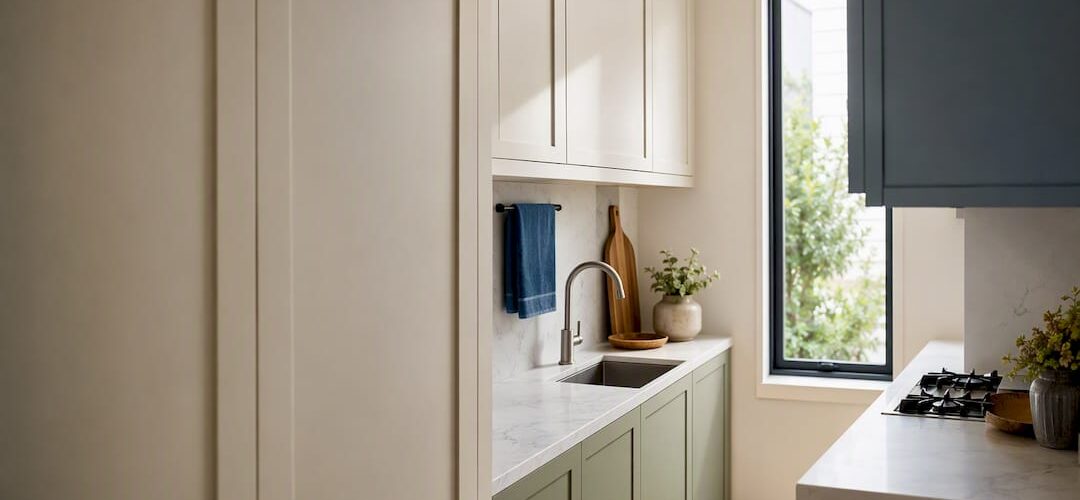
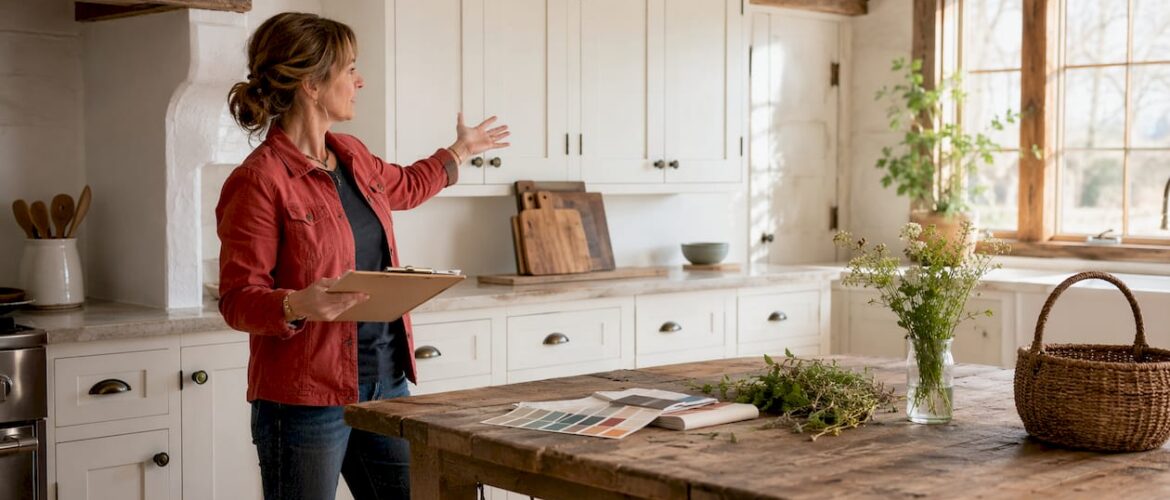
Farmhouse kitchen cabinet style is built on three things: natural materials, honest construction, and a look that feels lived-in rather than staged. The style draws from the working kitchens of American rural homes, where solid wood, simple door profiles, and functional hardware were chosen for durability first and appearance second. Today, that same philosophy drives one of the most enduring kitchen design trends in the country.
The core characteristics of farmhouse cabinets include:
- Door styles: Shaker doors (five-piece frames with a recessed center panel) and in-frame designs are the gold standard, offering clean lines without fussy ornamentation
- Wood species: Oak, pine, maple, and hickory are the preferred choices, prized for their grain, texture, and ability to age gracefully
- Color palettes: Soft whites, warm creams, sage green, slate blue, and natural wood tones dominate; deep, saturated hues are rare
- Hardware: Black iron, antique bronze, cup pulls, and bail handles give cabinets an authentic, grounded feel
- Finishes: Matte or eggshell sheens over high-gloss, preserving the worn, authentic look that defines the style
The goal, as design experts put it, is atmosphere over rigid rules: a kitchen that feels like it evolved naturally, not one assembled from a catalog.
Table of Contents
- What defines farmhouse kitchen cabinet style in practice?
- How do traditional and modern farmhouse cabinet styles differ?
- Why utility and craftsmanship matter more than looks
- How to blend modern convenience into a farmhouse kitchen
- Cabinet refinishing: the fastest path to farmhouse style
- How to fit farmhouse cabinets into any kitchen layout
- Keeping farmhouse cabinets looking their best
- What farmhouse cabinet trends look like in 2026
- Key Takeaways
What defines farmhouse kitchen cabinet style in practice?
Hardware is where farmhouse cabinets get specific. Black iron and oil-rubbed bronze cup pulls and bail handles are the most common choices, and placement follows a practical standard: 4–6 inches from the corner on base cabinets, 2–3 inches on uppers. That spacing balances proportion and ease of use, which is exactly what farmhouse design is about.
Open shelving plays a key role too. A few floating wood shelves above the sink or stove break up a heavy run of cabinetry and give the kitchen a relaxed, accessible feel. Display cookbooks, pottery, or everyday dishes there, and the space immediately reads as warm rather than formal.
- Matte and eggshell finishes hide daily smudges and scuffs far better than gloss, which is why they dominate rustic kitchen cabinet styles
- Common wood species (oak, hickory, maple, pine) provide the grain and texture that age beautifully rather than showing wear as damage
- Open shelving mixed with closed storage creates visual rhythm and accessibility
- Glass-front doors on a few upper units add depth and let dishware become part of the decor
- Beadboard paneling on cabinet backs or sides adds texture instantly without overwhelming the space
Pro Tip: Choose hardware made from forged iron or solid brass rather than plated zinc. Plated finishes wear through at contact points within a few years; solid materials develop a patina that actually improves the farmhouse look over time.
How do traditional and modern farmhouse cabinet styles differ?
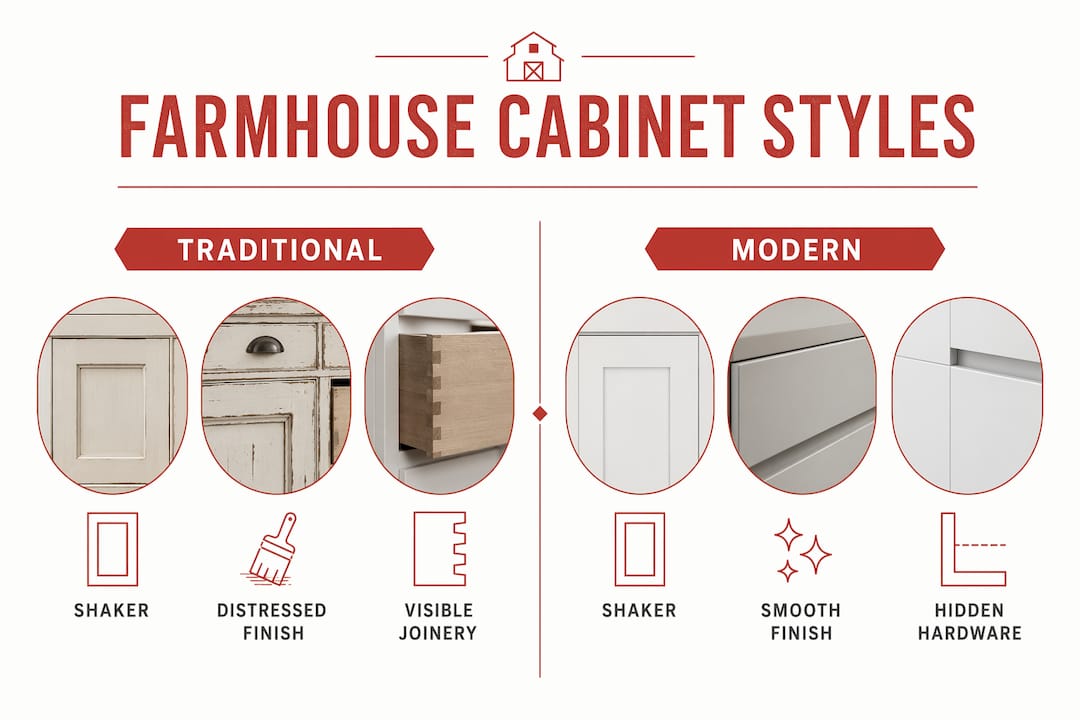
The gap between traditional and modern farmhouse is real, but it is not as wide as it might seem. Both value craftsmanship and natural materials. The difference is mostly in how much restraint gets applied.
| Feature | Traditional farmhouse | Modern farmhouse |
|---|---|---|
| Door style | Shaker, in-frame, beadboard | Shaker, transitional slab |
| Wood finish | Distressed, natural, reclaimed | Clean stain, painted neutral |
| Hardware | Heavy black iron, antique bronze | Matte black, brushed nickel |
| Color palette | Creamy whites, warm wood tones | White, greige, soft green |
| Storage | Open shelving, freestanding hutches | Mix of open and concealed |
| Design feel | Heavier, more textured, layered | Cleaner lines, less clutter |
Traditional farmhouse cabinets lean into visible joinery, distressed finishes, and heavier solid wood. Modern farmhouse blends those rustic elements with minimalist lines, two-tone cabinetry, and a more curated palette. A white shaker upper paired with a stained wood island is a classic modern farmhouse move: the warmth is there, but the overall composition reads cleaner.
One thing both versions share is a resistance to the matchy-matchy uniformity of mass-produced kitchens. Mixing painted cabinets with natural wood elements adds depth that a single-finish kitchen simply cannot achieve.
Why utility and craftsmanship matter more than looks
Farmhouse cabinetry was never designed to impress at first glance. It was designed to work. Shaker doors remain the gold standard precisely because their elegance comes from proportion and construction, not decoration.
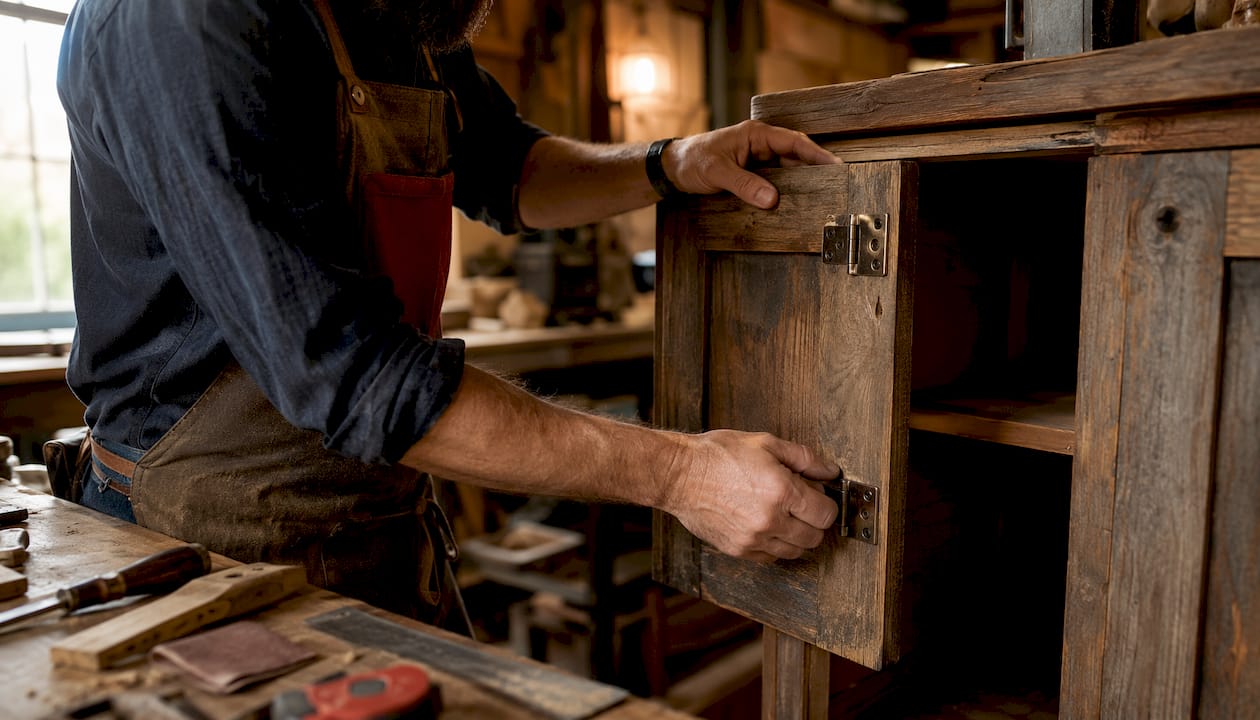
The joinery tells the real story. Mortise and tenon or dovetail joints are the marks of authentic farmhouse construction: interlocking wood connections that grow stronger with age rather than loosening like screws in particleboard. Drawers built with dovetail joints are nearly impossible to pull apart, which is why original farmhouse cabinets from a century ago still function perfectly while mass-produced alternatives fail within a decade.
- Solid hardwoods (maple, oak, quartersawn oak) resist warping and denting through decades of daily use
- Substantial doors and frames give farmhouse cabinets their characteristic visual weight and heft
- Visible joinery serves as decoration, celebrating the craft rather than hiding it
- Avoiding high-gloss finishes keeps the aged, authentic appeal intact and makes minor wear look intentional
Pro Tip: When evaluating cabinet quality, open a drawer and look at the corner joints. Visible dovetails cut from solid wood signal real craftsmanship. Stapled butt joints wrapped in veneer signal the opposite.
How to blend modern convenience into a farmhouse kitchen
The best farmhouse kitchens feel old but work like new. Soft-close hinges and pull-out organizers fit behind classic shaker doors without changing the exterior look at all. Built-in trash systems, deep pot drawers, and pantry pull-outs all honor the farmhouse principle of “a place for everything” while meeting modern expectations.
Two-tone cabinetry is one of the most practical tools in this style. White or cream uppers keep the space bright; a deeper color or natural wood on the lowers adds warmth and prevents the kitchen from feeling sterile. The Shaker cabinet’s timeless versatility makes it the easiest door style to carry across both tones without visual conflict.
- Use soft-close hinges and drawer glides behind any traditional-style door
- Add pull-out organizers, lazy Susans, and built-in dividers inside base cabinets
- Mix open shelving with glass-front uppers for display without sacrificing storage
- Choose a two-tone palette to add depth and break up uniform cabinetry runs
- Keep hardware consistent across both tones to unify the design
Cabinet refinishing: the fastest path to farmhouse style
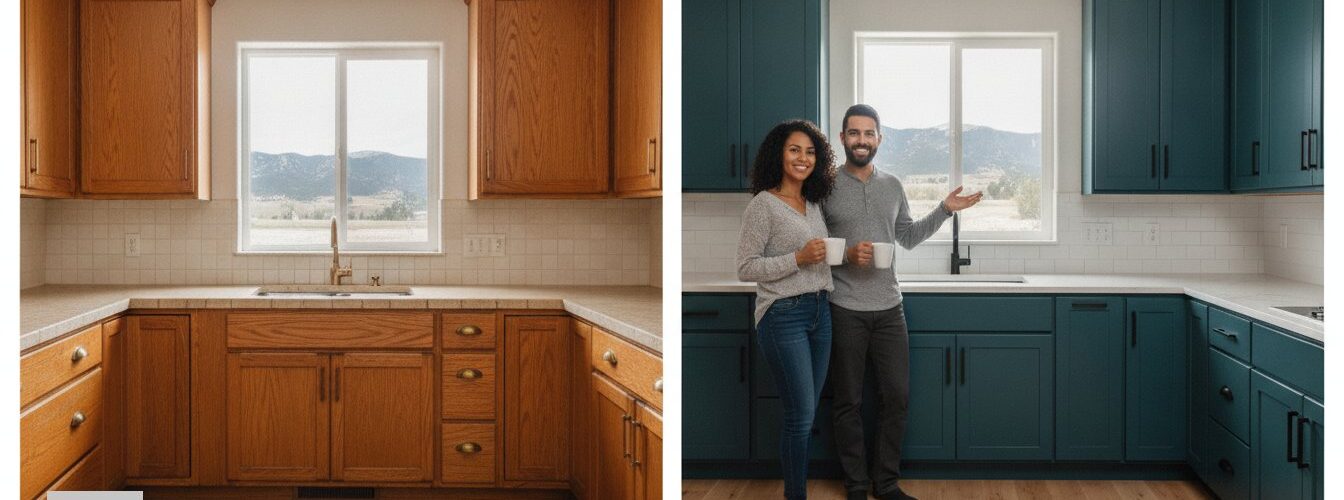
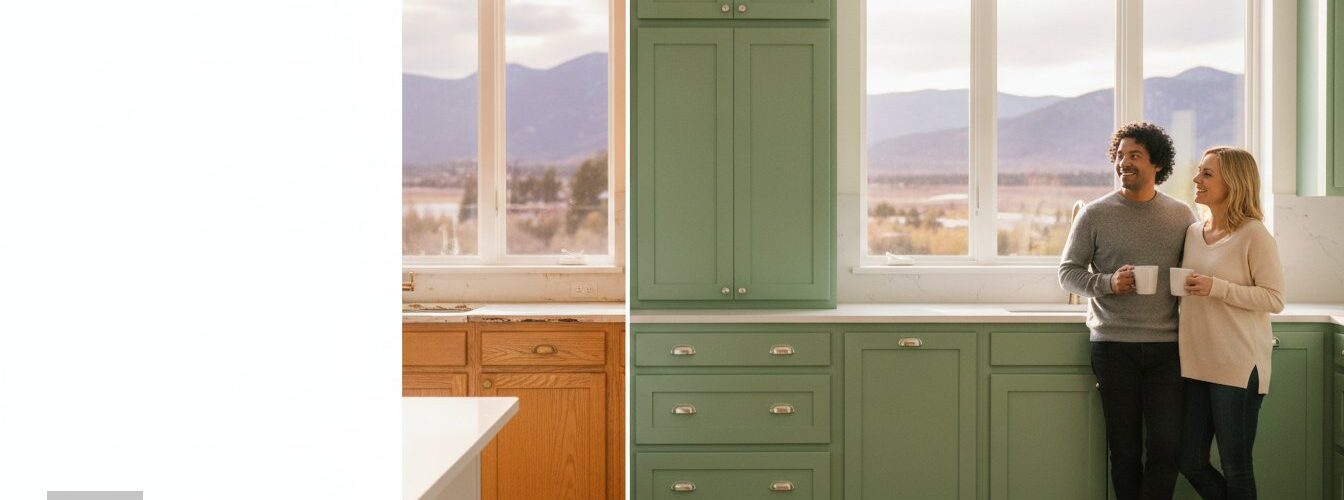
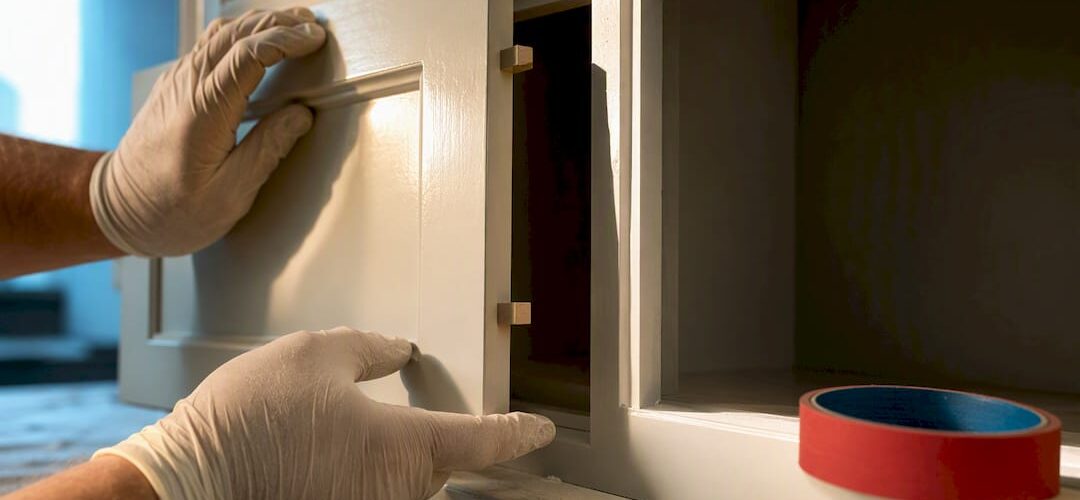
If your existing cabinets are solid wood, you may already have the bones of a farmhouse kitchen. Refinishing preserves that structure while updating the finish, color, and hardware to match the style you want.
The cost difference is hard to ignore. Refinishing typically runs a few thousand dollars, while full cabinet replacement costs significantly more. Projects complete in 3–5 days rather than the weeks a full remodel demands.
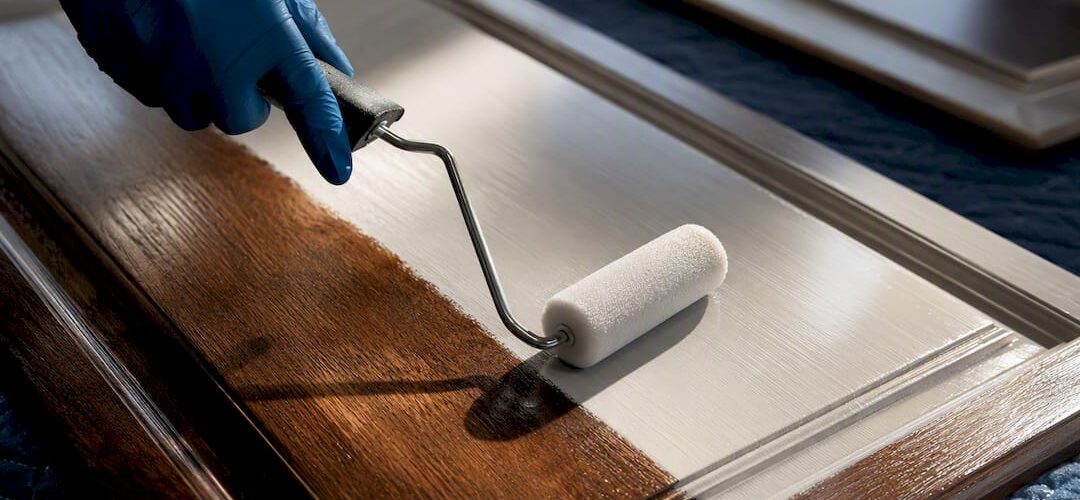
Cabinetsrefinishing uses a factory-finish methodology that applies meticulous surface preparation followed by multiple protective topcoats, producing a finish that holds up to daily kitchen use. That process matters for farmhouse cabinets specifically, because the goal is a durable matte or eggshell surface that ages well rather than a fragile gloss that chips and shows every scratch.
- Refinishing updates color, sheen, and texture while keeping solid wood intact
- New hardware (cup pulls, bail handles, matte black knobs) completes the farmhouse transformation at minimal cost
- A matte or eggshell topcoat applied over proper primer delivers the authentic farmhouse finish
- The 2026 trend toward warmer neutrals and natural wood tones aligns perfectly with what refinishing can achieve
Ready to give your kitchen that farmhouse look without a full remodel? Contact Cabinetsrefinishing to get a quote on professional cabinet refinishing in Denver, or explore whether your cabinets are candidates for refinishing rather than replacement.
How to fit farmhouse cabinets into any kitchen layout
Farmhouse style adapts well across kitchen configurations, but the approach shifts depending on the layout.
In a galley kitchen, keep upper cabinets simple and lean on open shelving at one end to prevent the space from feeling like a corridor. A single run of shaker lowers in a warm cream with wood-toned open shelves above creates the farmhouse feel without crowding the sightlines.
An L-shaped or U-shaped kitchen gives you room to play with two-tone cabinetry. Use painted perimeter cabinets and a stained wood island as the focal point. The island in a contrasting finish grounds the space and adds the layered, evolved look that defines authentic farmhouse design.
Open-concept kitchens benefit from consistent cabinet color carried through the visible run, with open shelving near the transition to the living area softening the boundary. A farmhouse sink centered under a window, flanked by shaker cabinets, anchors the kitchen visually even in a large open floor plan.
Keeping farmhouse cabinets looking their best
Matte and eggshell finishes are easier to live with than gloss, but they do require specific care. Avoid abrasive scrubbers, which dull the sheen and scratch the surface. A soft cloth with mild dish soap handles most kitchen messes without damaging the finish.
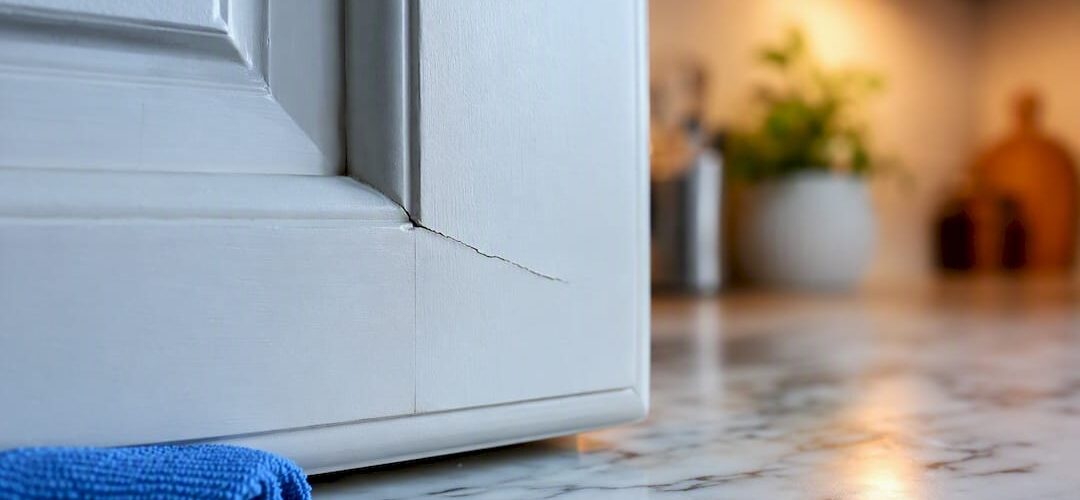
Wood cabinets in natural or stained finishes benefit from an occasional wipe-down with a wood-safe conditioner, especially in dry climates. This prevents the wood from drying out and cracking at joints over time. For painted farmhouse cabinets, touch-up paint in the original color is worth keeping on hand; small chips on shaker door edges are common and easy to fix before they spread.
Hardware needs attention too. Black iron and oil-rubbed bronze finishes can be wiped with a dry cloth to remove grease. Avoid harsh chemical cleaners, which strip the patina that gives the hardware its character. Tighten screws on pulls and knobs every year or two, since daily use gradually works them loose.
What farmhouse cabinet trends look like in 2026
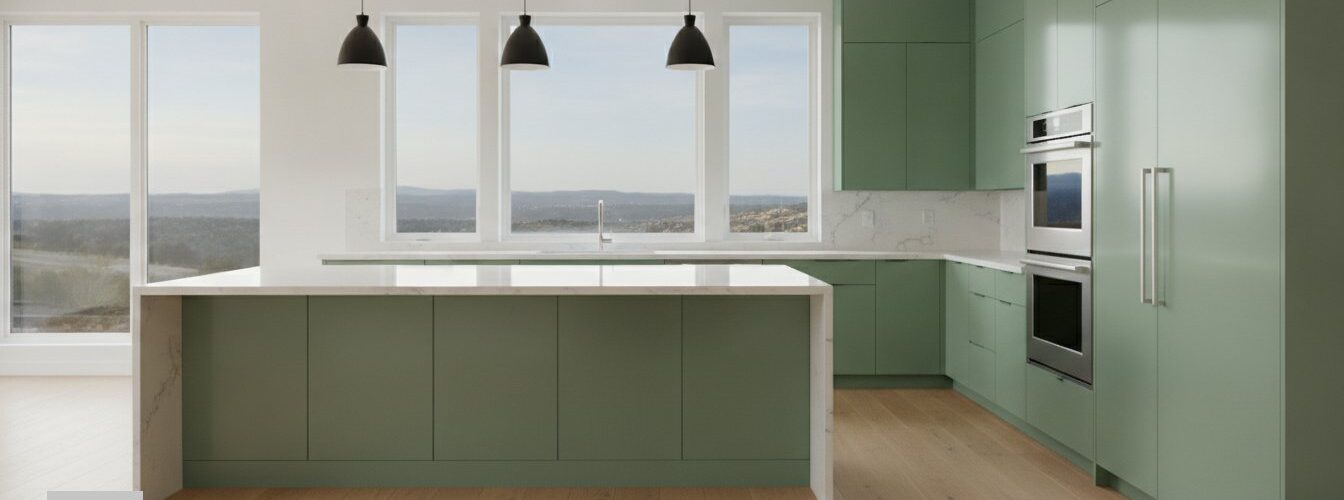
The farmhouse style has shifted noticeably toward warmer, earthier tones. Crisp white is still popular, but soft greige, warm sage, and terracotta-adjacent neutrals are gaining ground as homeowners move away from the stark white kitchens that dominated the previous decade. Family-friendly color palettes in muted greens and warm creams fit naturally into the farmhouse framework.
Reclaimed and distressed finishes continue to draw interest, particularly for islands and accent pieces. Hand-planed edges, visible knots, and layered stain-and-glaze techniques give new cabinetry the appearance of age without the cost of true reclaimed wood. Mixed-material kitchens, pairing painted shaker uppers with a live-edge or butcher-block island, reflect the farmhouse principle that a kitchen should look assembled over time rather than purchased all at once.
Integrated appliances hidden behind panel-ready doors are another growing trend, letting modern refrigerators and dishwashers disappear behind the same shaker-style fronts as the rest of the cabinetry. The farmhouse look stays intact; the technology underneath is fully current.
Key Takeaways
Farmhouse kitchen cabinet style succeeds because it prioritizes honest materials, durable construction, and a welcoming atmosphere over trends or high-gloss perfection.
| Point | Details |
|---|---|
| Core door style | Shaker and in-frame doors define the look with clean lines and recessed panels. |
| Hardware placement | Cup pulls and bail handles sit 4–6 inches from the corner on base cabinets, 2–3 inches on uppers. |
| Finish choice | Matte or eggshell sheens age better than gloss and hide everyday kitchen wear. |
| Refinishing vs. replacement | Refinishing costs $3,000–$8,000 versus $15,000–$40,000 for full replacement, completing in 3–5 days. |
| Modern integration | Soft-close hinges and pull-out organizers fit behind traditional shaker doors without changing the exterior look. |
Recommended
- Family-Friendly Kitchen Cabinet Colors: 2026 Guide – Cabinet Refinishing and Cabinet Painting Denver 720-219-9716
- Why Cabinets Are the Kitchen Focal Point – Cabinet Refinishing and Cabinet Painting Denver 720-219-9716
- How to Modernize Dated Kitchen Cabinets in 2026 720-219-9716
- Kitchen Cabinet Color Trends 2026: What’s Hot Right Now – Cabinet Refinishing and Cabinet Painting Denver 720-219-9716