
Why Experienced Cabinet Refinishing Pros Matter
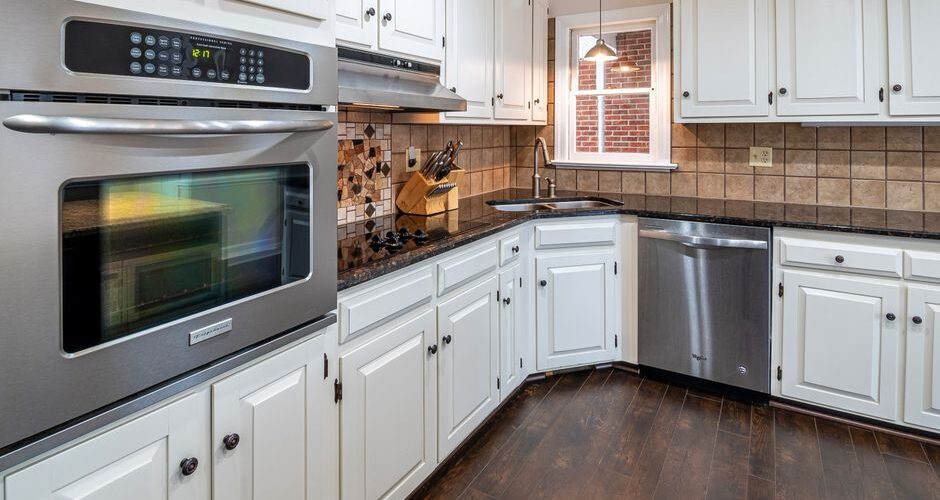
Kitchen cabinets dominate the visual space in your kitchen and they take daily abuse from hands, heat, grease, and cleaning products. When the finish fails, your whole kitchen looks tired, even if the layout is fine.
My Review of Graco FFLP Tips for Spraying Cabinets
Experienced cabinet refinishing professionals for kitchen cabinets can give you a factory-grade look without the cost and disruption of full replacement. The challenge is that not every painter or contractor has the skills, tools, or process to refinish cabinets correctly. Poor prep, wrong products, and rushed timelines lead to peeling, chipping, and an uneven finish that hurts your home value.
This guide walks Denver homeowners, investors, and contractors through how to evaluate cabinet refinishing pros, what a quality process looks like, and what you should expect in terms of budget, timelines, and results.
Cabinet Painting Service Areas in Denver & Surrounding Cities, Cabinet Refinishing in Denverc County,
Serving Lakewood, CO, Littleton, CO, Golden, CO, Evergreen CO, Roxborough Park CO, Ken Carl Ranch CO,
Arvada, CO, Wheat Ridge, CO,
and Parker CO. Castle Pines CO. Englewood CO. Centennial CO.
Cabinet Painting in Arapahoe County, CO
Including Centennial, CO, Greenwood Village, CO,
Cherry Hills Village, CO, Englewood, CO,
and Aurora, CO.
Cabinet Painting in Adams County & Broomfield, CO
What “Experienced Cabinet Refinishing Professionals” Really Means
Not every painting company is truly set up for cabinet refinishing. You are looking for specialists, not generalists who occasionally paint cabinets.
Core indicators of true cabinet refinishing expertise
Look for professionals who can demonstrate:
- A portfolio of at least 30 to 50 completed kitchen cabinet projects, not just walls and trim
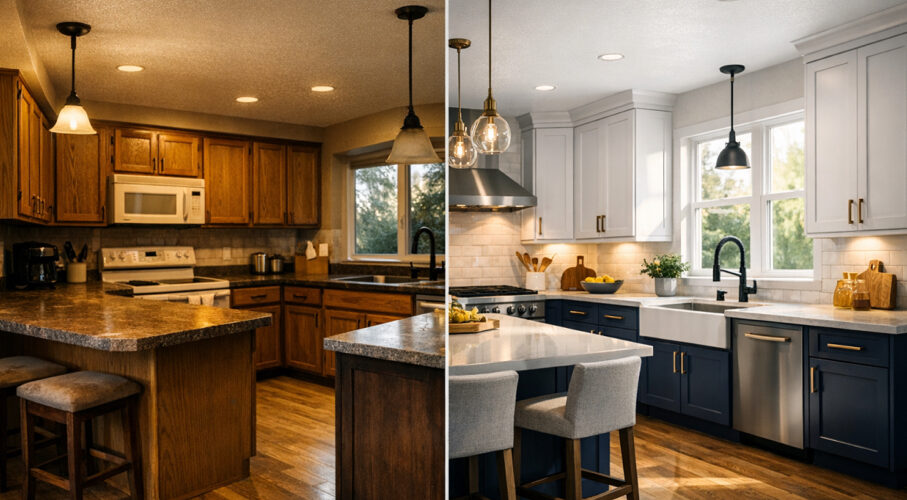
- Before and after photos that show close-ups of doors, edges, and wear points
- References from past cabinet clients, ideally in the Denver metro area
- Clear explanation of products used: specific primers, industrial-grade coatings, and application methods
In Denver’s dry climate and altitude, products behave differently. Experienced pros will know which primers bond best to lacquered oak, thermofoil, or factory MDF, and which topcoats resist Colorado’s UV exposure that floods many kitchens.
Key Takeaway: If a contractor cannot speak confidently about cabinet-specific products and process, they are not a cabinet refinishing specialist, regardless of how long they have been “painting.”
Red flags that signal inexperience
Be cautious if you hear:
- “We just scuff and paint with the same paint we use on trim.”
- “No need to remove doors; we can do it all in place.”
- “We can be in and out in two days, no problem.”
These shortcuts lead to premature failure, especially on high-touch areas like around pulls and under the sink.
For a deeper look at professional workflows, see this related resource: Update Your Kitchen Cabinets In Denver With Professional Cabinet Refinishing.
The Professional Cabinet Refinishing Process Step by Step
A reliable way to judge experience is by asking a contractor to walk you through their process. A pro will have a repeatable, documented system, not a vague “we prep and paint.”
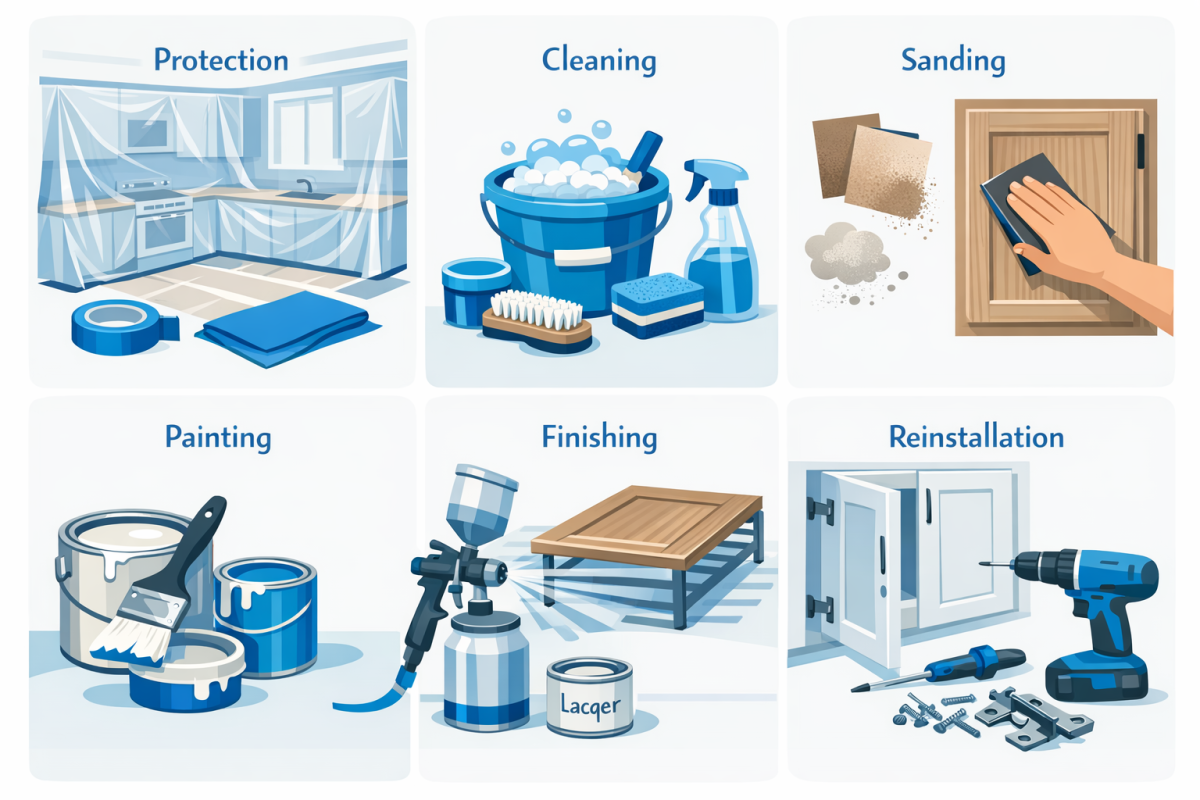
Preparation and protection
A professional process typically includes:
- Full masking and plastic sheeting of counters, floors, appliances, and open rooms
- Zip walls or temporary plastic partitions to control dust and overspray
- Labeling and removing all doors, drawers, and hardware, with organized storage
If they do not mention containment and labeling, expect chaos and dust.
Cleaning, sanding, and repairs
Degreasing is critical, especially in Denver kitchens where winter cooking and closed windows trap grease.
Pros will:
- Use industrial degreasers and scrub pads, then rinse thoroughly
- Mechanically sand all surfaces with dust extraction, not just hand-scuff randomly
- Fill dings, nail holes, and grain as requested, then re-sand to a smooth profile
- Address loose hinges, cracks, and seam separation before coating
Priming and coating
Experienced cabinet refinishers use:
- Bonding primers specifically formulated for slick cabinet finishes
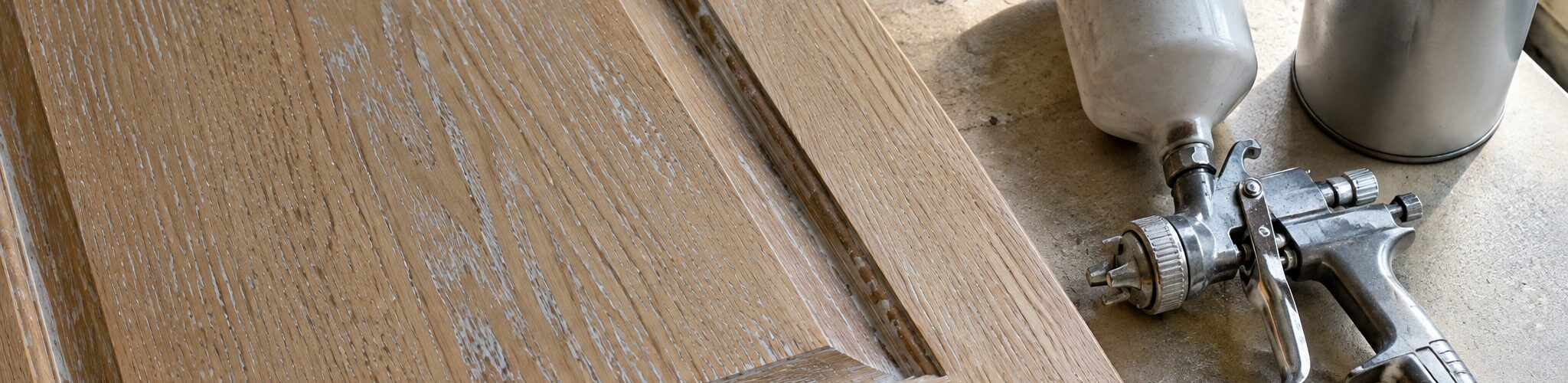
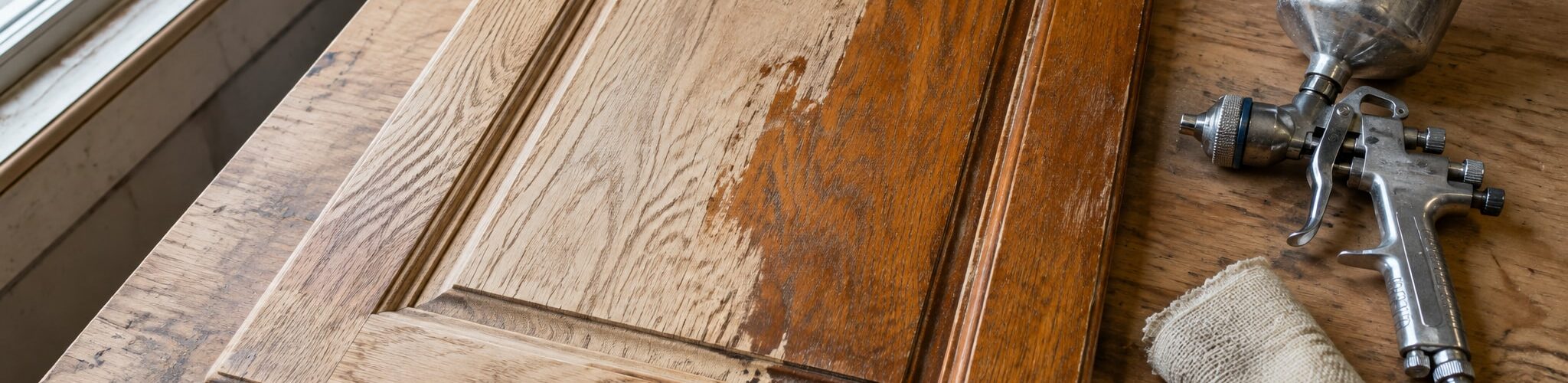
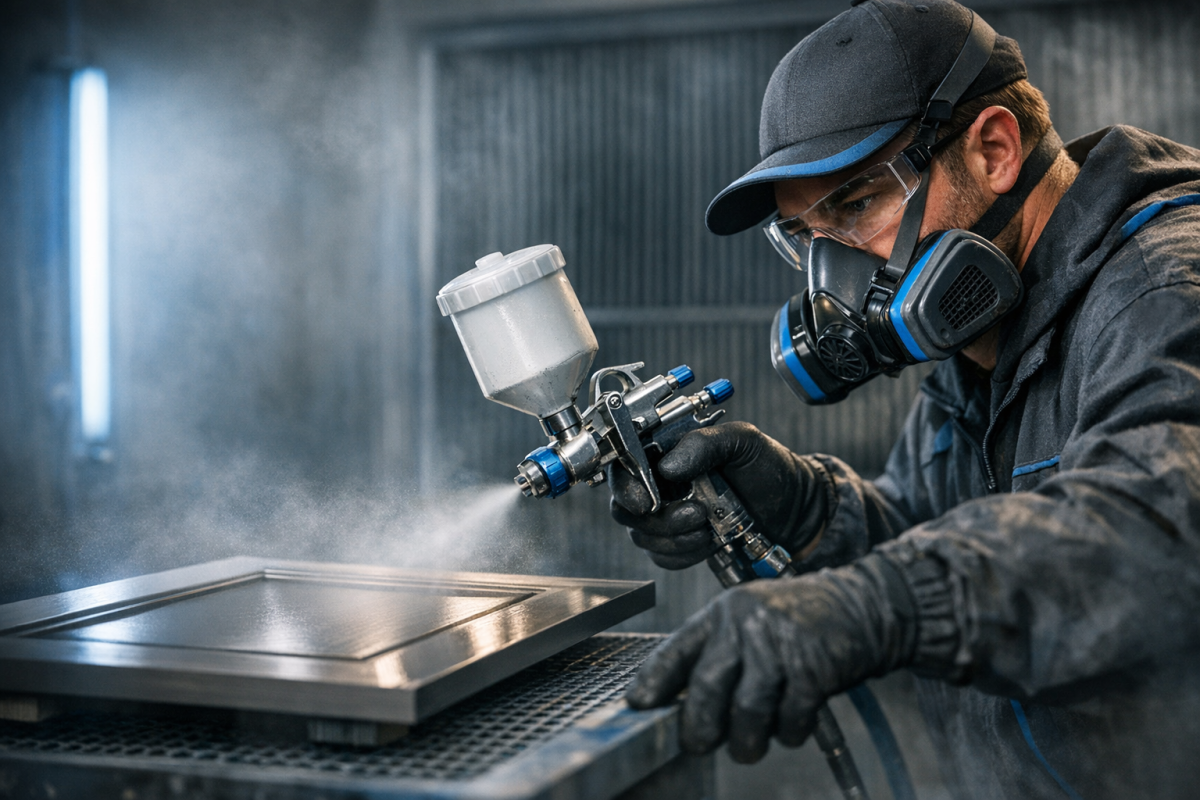
- Sprayed application with HVLP or airless equipment for a smooth, factory-like finish
- 2 to 3 topcoats of high-performance enamel, urethane, or catalyzed lacquer, depending on your needs
Dry times are closely managed, which is especially important in Denver’s low humidity to avoid flashing or roughness.
Reassembly and quality control
Before they call the job done, pros will:
- Reinstall doors and drawers, checking reveal alignment and soft-close mechanisms
- Reinstall or upgrade hardware, sometimes redrilling for new pulls
- Perform a walkthrough with you, touch up any minor flaws, and provide care instructions
Pro Tip: Ask the contractor what the finish will look like at 1 year and 5 years. An experienced refinisher will be honest about wear patterns and maintenance, not promise “it will look perfect forever.”
How to Evaluate Refinishing Pros Before You Hire
Choosing the right pro is less about price and more about process, track record, and communication. Use conversations with contractors as a screening tool.
Questions to ask during consultations
Ask specific, practical questions such as:
- “What products and sheens do you recommend for busy family kitchens or rentals?”
- “Do you spray or brush and roll the cabinets, and why?”
- “How do you handle grainy oak if I want a smoother, more modern look?”
- “Can you show three recent projects within 20 miles of my home?”
Their answers should be detailed and consistent, not “it depends, we will see.”
What should be in a professional estimate
A detailed estimate from an experienced cabinet refinishing professional for kitchen cabinets in Denver should include:
| Element | What To Look For |
|---|---|
| Scope of work | Exact cabinet count, sides, crown, island, pantry, etc. |
| Prep details | Cleaning, sanding, filling, masking, dust control |
| Products specified | Brand and type of primer and topcoat |
| Application method | Spray vs brush/roll, location of spraying |
| Timeline | Start and completion dates, daily work hours |
| Warranty | Length of coverage and what is excluded |
A vague, one-line estimate suggests a contractor who has not thought through the project details.
Reviewing photos and references with intention
When looking at before and after photos:
- Zoom in on corners and profiles to see if lines are crisp
- Check darker colors on doors for orange peel or excessive texture
- Compare grain visibility in oak projects if you want a modern, minimized-grain look
For references, ask prior clients:
- “Did they finish on time and on budget?”
- “How did they handle surprises or small issues?”
- “What do your cabinets look like today?”
Cost, Timelines, and ROI for Different Property Types
Experienced cabinet refinishing is an investment, but it is often a fraction of the cost of new cabinets. For Denver homeowners and investors, understanding ROI and realistic timelines is key.
Typical cost ranges in the Denver metro area
Actual pricing varies by cabinet count, complexity, and finish demands, but ballpark ranges for professional refinishing are often:
| Property Type | Typical Kitchen Size | Approximate Range* |
|---|---|---|
| Owner-occupied home | 20 to 35 doors | $3,500 to $7,500 |
| High-end custom home | 35+ doors, details | $7,500 to $15,000+ |
| Rental / flip property | 18 to 28 doors | $3,000 to $6,000 |
*Ranges are for labor and materials, not including new hardware or modifications. Always get a project-specific quote.
Compared to full replacement, which can easily run $18,000 to $40,000 in Denver, refinishing often saves 50 to 75 percent while still delivering a dramatic visual upgrade.
Project duration and occupancy
Most professional projects run:
- 4 to 7 working days for an average kitchen
- 7 to 10 working days for large or highly detailed kitchens
You can usually stay in the home, but expect limited kitchen use for several days. Experienced pros set up temporary access to essentials like a microwave or fridge where possible.
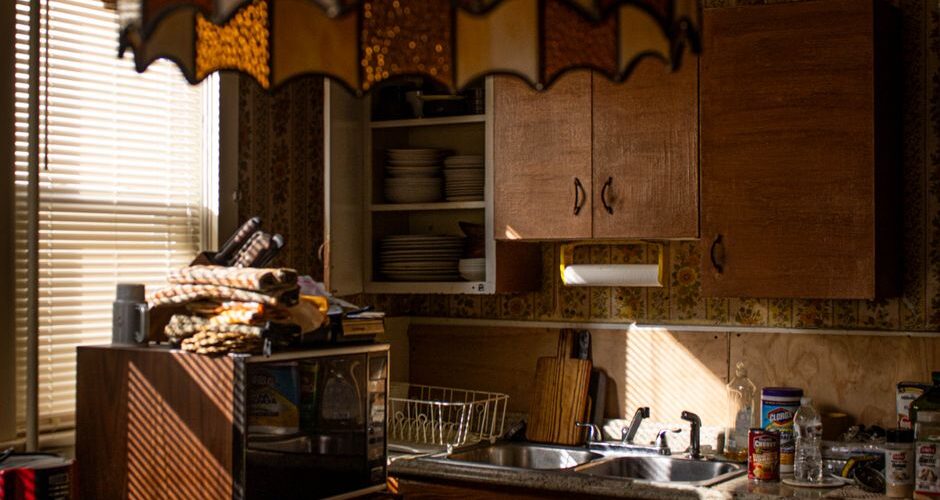
Real-World Example: A Denver investor updating a 1980s rental kitchen with oak cabinets and laminate counters can refinish cabinets white, add new hardware, and install a mid-range quartz top. The kitchen feels modern and rents increase by $200 to $300 per month, often paying back the refinishing cost within 12 to 18 months.
Customization Options: Colors, Sheens, and Design Details
Experienced cabinet refinishers can do much more than just “paint them white.” Thoughtful design decisions matter for resale, daily use, and cleaning.
Color strategies for different audiences
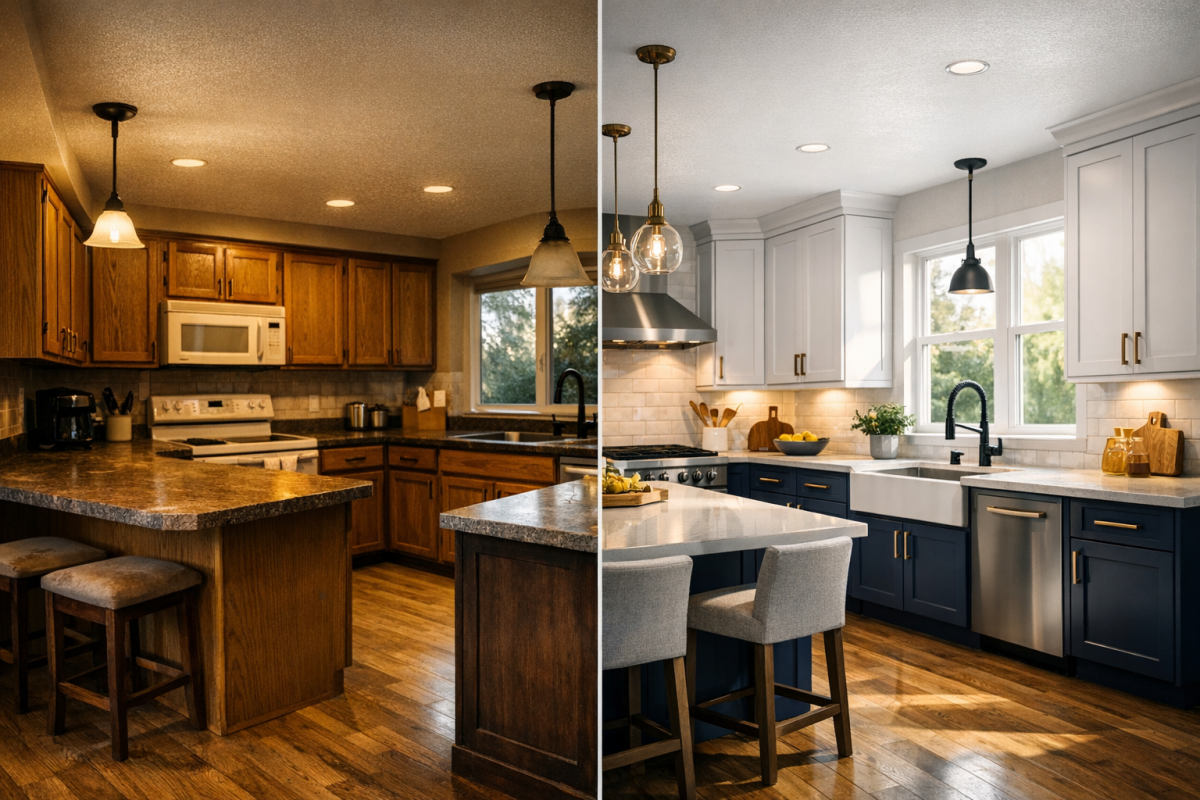
- Owner-occupied homes: Soft whites, greiges, or two-tone combinations like white uppers with navy or charcoal lowers. These feel timeless and photograph well.
- Flips and rentals: Neutral colors like warm white or light greige reduce vacancy and appeal to the widest tenant pool.
- Design-forward properties: Deep green, black, or rich navy on lowers with wood accents can command higher pricing in competitive Denver neighborhoods.
For color inspiration and project examples, see Updating Your Kitchen Cabinets With Cabinet Refinishing And Cabinet Painting Denver.
Sheen and durability choices
Common sheens:
- Satin or low-sheen: Hides imperfections, still wipeable, great for older doors
- Semi-gloss: Very durable and easy to clean, but shows more texture
In busy family homes or rentals, a harder, cabinet-grade enamel in satin or semi-gloss usually performs best.
Design upgrades that pair well with refinishing
Experienced cabinet refinishing professionals for kitchen cabinets can often coordinate with small carpentry or hardware updates such as:
- Filling old handle holes and drilling for modern pulls
- Adding crown molding or light rail for a finished look
- Converting an unused desk area to pantry-style cabinets
- Installing soft-close hinges where feasible
These modest upgrades significantly increase perceived value compared to cost.
Common Mistakes When Hiring Cabinet Refinishers (And How To Avoid Them)
Most horror stories stem from the same set of avoidable mistakes. Knowing them upfront lets you screen contractors quickly.
Hiring based only on the cheapest price
The lowest bid usually skips something important, such as:
- Proper degreasing and sanding
- Quality primers and high-performance coatings
- Adequate coats or dry time
Cheap jobs often peel or chip within a year, which then costs more to fix than doing it correctly the first time.
Overlooking ventilation and dust control
Poor containment leads to overspray on floors, appliances, and adjoining rooms. Ask specifically:
- “How will you control dust and overspray?”
- “Where will you spray the doors and drawers?”
Experienced pros often spray doors off-site or in a controlled tented area with exhaust, especially in winter.
Ignoring warranty terms
A real warranty will specify:
- Length of coverage, usually 1 to 3 years for workmanship
- What is covered, such as peeling and premature adhesion failure
- What is not covered, such as damage from impacts or harsh cleaners
Important: A “lifetime warranty” on painted cabinets is usually marketing language, not a practical guarantee. Focus on clear, realistic coverage instead of slogans.
When To Refinish vs Replace or Reface
Even the best refinisher cannot fix a cabinet that is structurally failing. Knowing when to refinish and when to replace protects your budget.
Best candidates for refinishing
Refinishing is ideal when:
- Box structures are solid and layouts function well
- Doors are not severely warped or swollen
- You like the current configuration but want an updated look
- You are planning to stay at least 2 to 3 years or want to maximize short-term ROI for a sale
Solid wood doors, MDF with clean profiles, and many factory finishes respond very well to professional refinishing.
When replacement or refacing is smarter
Consider replacement or refacing if:
- Cabinets have significant water damage or mold
- Boxes are particle board that is crumbling or sagging
- You plan substantial layout changes, like moving appliances or removing walls
For projects where cabinets are worth keeping, however, a specialist service like Cabinet Refinishing Denver Transform Your Kitchen With Professional Cabinet Painting Services can deliver a high-impact transformation without full remodel costs.
Work With Cabinet Refinishing Denver: A Practical Next Step
If you are in the Denver metro area and want an experienced, cabinet-focused team, Cabinet Refinishing Denver specializes in professionally refinished kitchen cabinets that stand up to Colorado living.
Here is what you can expect:
- A detailed, written proposal that spells out prep, products, and timeline
- Cabinet-specific primers and industrial-grade topcoats selected for your kitchen’s use and light exposure
- Organized, dust-controlled work that respects owner-occupied homes, rentals, and flips
- Guidance on color, sheen, and hardware choices tailored to your property type and resale goals
To explore options for your kitchen, see project examples and learn about their process at Cabinet Refinishing Denver: https://cabinetsrefinishing.com
Call-to-action: Learn more
Key Takeaway: The right refinishing partner is not just applying paint. They are protecting a major asset in your home or portfolio, which affects appraised value, buyer perception, and long-term maintenance costs.
Your Next Steps To A Professionally Refinished Kitchen
To move forward confidently:
- Walk your kitchen and note cabinet condition, layout issues, and design goals.
- Collect inspiration photos that match your property type and target buyer or tenant.
- Interview at least two experienced cabinet refinishing professionals for kitchen cabinets in Denver and compare their processes in detail, not just price.
- Choose the contractor whose system, communication, and track record align with the level of finish you need.
Done right, professional cabinet refinishing can make your kitchen feel like a new space, at a fraction of full remodel cost and with far less disruption.
Frequently Asked Questions
How long does a professional cabinet refinishing job usually last?
With correct prep, quality primers, and cabinet-grade topcoats, a professionally refinished kitchen can look good for 8 to 12 years in an owner-occupied home. Lifespan depends on traffic, cleaning habits, and moisture. Rentals or short-term rentals may see faster wear, but a skilled refinisher will specify products to maximize durability in those environments.
Is cabinet refinishing worth it for a rental or flip property?
Yes, in Denver markets cabinet refinishing is often one of the highest ROI updates for rentals and flips. It modernizes listing photos and in-person showings without the cost of new boxes. You can often pair refinished cabinets with updated counters and hardware to justify higher rent or a stronger sale price while keeping turn times shorter than a full remodel.
Can any painter refinish kitchen cabinets?
Technically, any painter can attempt it, but cabinet refinishing is a specialty. It requires specific surface prep, bonding primers, durable topcoats, and spray equipment, along with containment and dust control. General painters who mostly do walls and trim often lack the systems and products needed for high-wear cabinet surfaces, which leads to peeling and chipping within a short time.
How do I care for professionally refinished cabinets?
Use mild, non-abrasive cleaners and soft cloths. Avoid harsh chemicals, scrubbing pads, and soaking edges near sinks. Wipe spills quickly, especially around dishwashers and sinks where steam and water are common. Do not hang wet towels over doors for long periods. Your refinisher should provide a care sheet; follow their guidelines to preserve the finish and warranty.
Can you change the wood grain look, like making oak look smoother?
Yes, to a point. Experienced pros can minimize oak grain with grain-filling compounds, multiple coats, and careful sanding, which creates a smoother, more modern look. It adds cost and time, and you will usually still see some residual pattern up close. Be sure to review samples or photos so your expectations match what is realistically achievable with your existing doors.