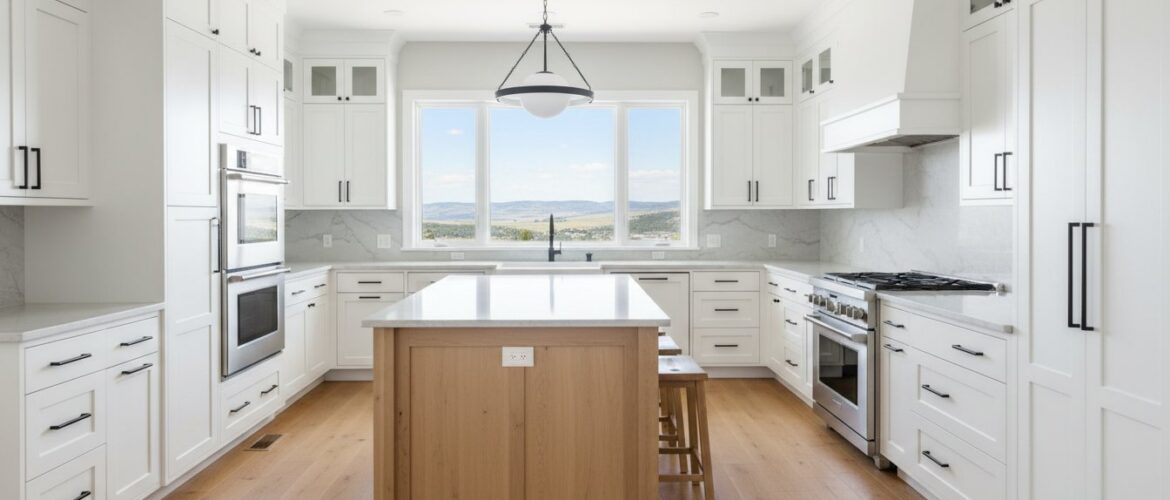
That stunning, factory-fresh white kitchen you invested in shouldn’t look like an antique ivory relic after just a few years. You likely chose white to make your home feel bright and modern, but seeing it turn dingy is a massive disappointment. Preventing yellowing on white painted cabinets requires more than just regular cleaning. It demands a professional understanding of how light exposure and grease buildup interact with specific paint chemistries.
You want a kitchen that retains its value and looks pristine for years to come. In this guide, you will learn the scientific causes of cabinet discoloration and the professional strategies Denver experts use to maintain a permanent, factory-like finish. We will explain the impact of Colorado’s 2026 VOC regulations on paint durability and why specific water-based alkyd enamels are now the gold standard for longevity. Our team brings 45 years of local experience to help you achieve a high-end result that boosts your home’s resale value while avoiding the frustration of a kitchen that looks aged before its time.
Key Takeaways
- Identify the three primary environmental triggers, including UV exposure and kitchen grease, that cause white finishes to degrade. Understanding these factors is essential for preventing yellowing on white painted cabinets in your Denver home.
- Learn why industrial-grade waterborne coatings are superior to retail oil-based paints that naturally turn amber as they age.
- Master proactive cleaning techniques and the use of professional-grade microfiber cloths to maintain a smooth, factory-like surface without causing micro-scratches.
- Discover why professional cabinet refinishing provides a 10 to 15 year lifespan compared to the short-lived results of DIY big-box store products.
- Leverage 45 years of local expertise to implement a coating system specifically designed to withstand the unique climate conditions found in Denver and surrounding areas.
Understanding Why White Kitchen Cabinets Turn Yellow
Yellowing is a complex chemical reaction, not a sign of a dirty house. It involves oxidation where the paint’s molecular structure changes over time. This is why preventing yellowing on white painted cabinets requires a proactive approach rather than just scrubbing. Surface stains like coffee or wine can be wiped away easily. Internal yellowing is different. It is a permanent breakdown of the coating itself that occurs deep within the paint layers. This transformation happens when the resins in the paint are exposed to specific environmental triggers.
Most homeowners don’t realize that traditional alkyd resins in oil-based coatings are naturally prone to turning yellow as they age. This happens most often in dark areas or when the paint is exposed to specific household chemicals. Heat from your stove and moisture from boiling water accelerate this oxidation process significantly. When these factors combine with poor material choices, the white finish you love begins to look aged and dingy within just a few years. Professional cabinet refinishing in Denver uses industrial coatings designed to resist these specific triggers.
To better understand how this chemical transition happens, watch this helpful video:
The Denver Factor: High Altitude and UV Exposure
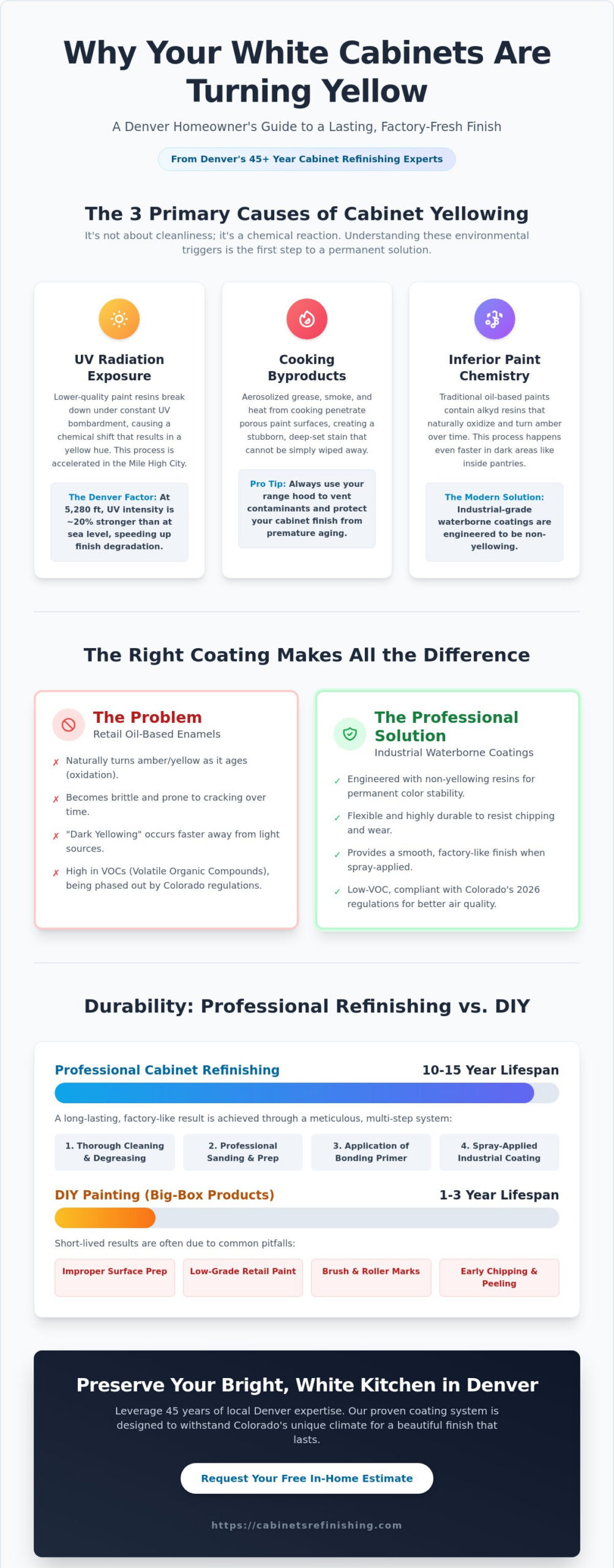
Denver’s 5,280 foot elevation presents a unique challenge for kitchen finishes. At this altitude, the atmosphere is thinner. This increases UV intensity by approximately 20 percent compared to sea level. This concentrated radiation penetrates your home and strikes your cabinets directly. Lower quality paint resins cannot withstand this constant bombardment. They become brittle and undergo a chemical shift that results in a yellow hue. For south facing kitchens in Lakewood or Aurora, we recommend using high quality window treatments to block direct sunlight during peak hours. This simple step protects your Cabinet Painting Denver investment from premature aging.
Cooking Byproducts: Grease, Smoke, and Chemical Reactions
Your cooking habits play a major role in the longevity of your white finish. Aerosolized grease and smoke are not just surface problems. These microscopic particles can penetrate porous, lower grade paint surfaces and become trapped. High heat cooking without proper ventilation creates a staining effect that is nearly impossible to reverse once it sets in. You must also be careful with maintenance. Using ammonia based cleaners is a common mistake that can trigger an immediate yellowing reaction on certain finishes. Stick to mild, pH neutral cleaners and ensure your range hood is always running to protect the surface. Our Cabinet Refinishing Denver process includes a meticulous cleaning stage to ensure these contaminants are fully removed before any new coating is applied.
The Chemistry of Paint: Why Coating Choice is Critical
Preventing yellowing on white painted cabinets requires a deep dive into the molecular structure of your kitchen coatings. Chromophores are the specific parts of a molecule responsible for its color. When these chemical bonds are exposed to heat or oxygen, they break down and begin to reflect light in the yellow spectrum. This isn’t just a surface issue; it’s a structural failure of the paint binder itself. Many standard white paints also contain subtle yellow pigments that are only masked when the paint is fresh. As the resin degrades over time, these undertones become visible. Our process utilizes non-yellowing clear topcoats to lock in the intended color and provide an extra layer of chemical protection.
The Problem with Oil-Based Enamels
Traditional oil-based paints are notorious for a phenomenon called dark yellowing. Unlike the UV-driven issues discussed in the previous section, oil-based resins actually turn yellow faster in dark areas like the inside of your cabinet doors or the back of a pantry. These coatings use natural oils that oxidize and turn amber as they age. Colorado’s 2026 regulations now limit VOCs to 50 g/L for most architectural coatings, making these high-solvent oil paints increasingly rare. This is a positive shift for homeowners because it moves the market toward more stable, modern resins that don’t rely on yellowing-prone binders. As these older finishes age, they become brittle and lose their crisp white appearance.
Industrial Waterborne Acrylics and Polyurethanes
Professional Cabinet refinishing Denver relies on high-performance waterborne coatings that utilize acrylic resins. Unlike oil-based binders, these resins remain water-clear for their entire lifespan. They don’t have the natural amber tint that causes white cabinets to look dingy after a few years. The secret to their durability is cross-linking technology. As the paint dries, the molecules form interconnected bonds that create a hard, non-porous surface. This industrial finish is what allows us to achieve a factory-like result that lasts for 10 to 15 years.
To keep your new finish in peak condition, you should Protect from Sunlight and Humidity. Sunlight accelerates the breakdown of even the best binders, while humidity can stress the bond between the paint and the wood. Our team has 45 years of experience selecting the exact chemical combinations that thrive in the unique Denver climate. If your current kitchen is showing its age, cabinet restoration is a superior way to get a bright, durable finish without the high cost of a full replacement.
Daily Habits to Maintain a Bright White Finish
Maintaining a pristine kitchen requires a shift from reactive to proactive care. You shouldn’t wait until you see a dingy hue to start a cleaning routine. Preventing yellowing on white painted cabinets is a daily commitment that starts with the right tools. We always recommend using high-quality microfiber cloths for all surface wiping. These cloths trap dust and aerosolized grease without creating micro-scratches. Standard paper towels or rough sponges can leave tiny abrasions on the paint surface. These scratches eventually harbor contaminants that lead to visible staining and chemical breakdown.
Early detection is the key to preserving your investment. You should inspect the areas around your stove, dishwasher, and sink every week. Look for subtle shifts in color or a sticky texture that indicates grease buildup. If you catch these issues early, you can remove the contaminants before they penetrate the coating. This is especially important for homeowners in high-traffic areas like Denver and Lakewood where indoor air quality can vary. Consistent care ensures the factory-like finish from your Cabinet refinishing Denver project stays bright for years.
Safe Cleaning Protocols for Painted Cabinets
The chemicals you use on your cabinets can be just as damaging as the grease itself. You must never use bleach, ammonia, or abrasive scouring pads on painted surfaces. These harsh substances can trigger a chemical reaction that causes immediate yellowing. Instead, use a simple DIY solution of mild dish soap and warm water. This mixture is effective at breaking down oils without compromising the paint’s integrity. Always use the dry-wipe technique. After cleaning with a damp cloth, immediately follow up with a fresh, dry microfiber cloth to remove all moisture. This prevents water from seeping into the seams of the cabinet doors where it can cause the wood to swell or the paint to peel.
Ventilation and Heat Management
Consistent ventilation is your best defense against grease-related yellowing. You should turn on your range hood at least two minutes before you start cooking and let it run for five minutes after you finish. This creates a consistent airflow that pulls aerosolized oils out of the kitchen before they land on your white surfaces. Heat management is equally vital. Small appliances like toasters, coffee makers, and air fryers generate significant heat and steam. If these are placed directly under upper cabinets, the constant thermal stress can yellow the finish. We recommend pulling these appliances out from under the cabinets during use. This simple habit protects the coating from the localized heat that accelerates oxidation. Whether you are in Boulder or Aurora, these small adjustments to your daily routine will significantly extend the life of your Cabinet Painting Denver results.
Professional Cabinet Refinishing vs. DIY Painting
A DIY brush-on job usually begins to fail within 2 to 3 years. In contrast, professional cabinet refinishing provides a durable surface that lasts 10 to 15 years or more. Preventing yellowing on white painted cabinets is nearly impossible with “all-in-one” products found at big-box stores. These retail paints lack the chemical stabilizers and industrial resins found in professional-grade coatings. They are prone to ambering and chipping almost immediately. We utilize industrial-strength primers that act as a chemical barrier. These primers block tannin bleed from wood and prevent previous stains from migrating to the surface. Refinishing is a superior alternative to replacement because it delivers the same factory-like results at a fraction of the cost of new cabinetry.
The Meticulous Preparation Process
Longevity depends entirely on the preparation phase. DIYers often skip the rigorous “clean, scuff, prime” workflow that we have perfected over 45 years. We begin with a deep degreasing process to remove every trace of household oils. Professional sanding follows to create a mechanical bond. This microscopic texture allows the primer to “bite” into the wood surface. Without this step, the paint simply sits on top of the old finish and will eventually peel. Our team performs extensive masking of your floors, appliances, countertops, and walls. We use professional-grade tapes and papers to create a sealed environment. This level of protection ensures that only the cabinets receive the coating. This meticulous approach is what separates a professional result from a temporary weekend project.
Spray Application for a Factory-Like Finish
Texture is the biggest giveaway of a DIY job. Brushes and rollers leave valleys and ridges where grease and dust settle over time. We use high-volume low-pressure (HVLP) spray systems to achieve a perfectly level surface. This smooth finish is non-porous and significantly easier to clean. It resists the buildup of aerosolized cooking oils that lead to yellowing. In the competitive Denver real estate market, a factory-finish kitchen is a massive selling point. It increases home resale value by providing a look that is indistinguishable from brand-new custom cabinetry. You don’t have to settle for a kitchen that looks painted when you can have one that looks manufactured. Our Cabinet Painting Denver system ensures your white cabinets remain crisp and bright regardless of the altitude or sunlight exposure.
If you want a kitchen that stays bright white for a decade, Cabinet refinishing Denver is the professional solution you need to transform your space without the stress of a full remodel.
Cabinet Painting Denver: Our 45-Year Solution for Lasting Results
Painting Kitchen Cabinets Denver provides a level of precision that general house painters simply cannot achieve. We have spent 45 years refining our Cabinet Refinishing Denver process to withstand the harsh UV rays and dry climate of the Front Range. Preventing yellowing on white painted cabinets isn’t just about the topcoat; it’s about a complete chemical system. Our veteran craftsmen use industrial-grade materials that far outperform the latex paints used by standard residential painters. We encourage you to view our video documentation and local portfolios to see the flawless, factory-like results we provide for every client. This transparency proves our commitment to quality and durability in every kitchen we transform.
Our proven systems are tailored specifically for the Colorado environment. We understand how the 2026 VOC regulations impact coating performance and only use compliant, high-performance resins. This technical knowledge ensures your cabinets don’t just look good on day one, but remain bright white for over a decade. We prioritize a permanent bond through meticulous preparation, including deep cleaning and mechanical sanding. This approach eliminates the risk of peeling or ambering that often plagues lower-quality applications. When you choose our professional services, you are investing in a long-term solution that boosts your home’s resale value.
Serving the Greater Denver Area with Excellence
We take pride in transforming kitchens across the entire metro region. Our team provides dedicated Cabinet Painting Denver services in Highlands Ranch, Parker, Castle Pines, and Boulder. Being a local, licensed, and insured contractor means we understand the specific environmental factors in Lakewood and Aurora that affect paint longevity. Our local presence allows us to provide personalized consultations and faster turnaround times. We treat every home with the respect it deserves, ensuring a professional environment from start to finish. You can trust our experienced professionals to handle every detail of your Cabinet Refinishing Denver project with absolute care.
Get Your Instant Pricing and Expert Consultation
We value your time and offer streamlined communication for all homeowners. You can use our instant digital messaging to receive immediate pricing estimates for your project. This modern approach provides the transparency you need to make an informed decision. If you decide to move forward, our in-home consultation provides a deep dive into our meticulous preparation process. We detail exactly how we will mask your appliances and sand your surfaces to ensure a permanent bond. This transparency is why we have remained a trusted name in Cabinet Refinishing Denver for over four decades. Our goal is to provide a stress-free experience that results in a bright, durable kitchen. Schedule your free estimate with Cabinet Painting Denver today!
Protect Your Kitchen Investment with Professional Cabinet Restoration
Your kitchen should remain a bright, modern centerpiece for your home. Maintaining that crisp look requires more than just surface cleaning. It demands a professional understanding of chemical oxidation and UV protection. By choosing industrial waterborne coatings and professional application, you take the most effective step toward preventing yellowing on white painted cabinets. This ensures your cabinetry withstands the unique environmental pressures of the Denver climate while maintaining its factory-fresh appearance for years.
Our team provides 45+ years of local experience to homeowners in Denver, Boulder, and the surrounding metro areas. We offer a factory-like spray finish guarantee that standard house painters and DIY products cannot replicate. As a licensed and insured professional contractor in Colorado, we use proven systems to deliver durable, high-end results that boost your home’s resale value. You don’t have to deal with the frustration of a kitchen that looks prematurely aged or dingy. Get an Instant Quote for Your Denver Cabinet Project today and start your journey toward a brighter home. We are ready to help you achieve the long-lasting, professional results your kitchen deserves.
Frequently Asked Questions
Can I fix cabinets that have already turned yellow?
You can fix yellowed cabinets through professional cabinet refinishing. Cleaning won’t reverse internal chemical oxidation because the damage is within the paint itself. We strip the old finish and apply a modern, non-yellowing coating system. This process restores the factory-like look you originally wanted. Our Cabinet Refinishing Denver service uses industrial primers that block old stains. This is the only way to achieve a permanent white finish that lasts.
Does the type of lightbulb I use affect how yellow my cabinets look?
Lightbulb temperature significantly changes how your white cabinets appear to the eye. Bulbs with a low Kelvin rating, typically 2700K to 3000K, emit a warm, yellow glow. This makes even the brightest white paint look dingy or aged. We recommend using “daylight” or “cool white” LED bulbs in the 4000K to 5000K range. These bulbs provide a neutral light that highlights the true color of your Cabinet Painting Denver project.
How long does the professional cabinet refinishing process take in Denver?
A professional cabinet refinishing project in Denver typically takes three to five business days. We complete the meticulous preparation and spray application in a controlled environment. This timeline includes cleaning, sanding, and masking your entire kitchen to protect your home. Our efficient system minimizes downtime for your household. You can expect a fully transformed kitchen within a single week. We prioritize speed without compromising our high-quality standards.
Why is my white paint turning yellow in the areas that don’t get any sun?
White paint often turns yellow in dark areas due to the “dark yellowing” of traditional oil-based alkyd resins. These paints actually need light exposure to stay white. In dark pantries or cabinet interiors, the resins oxidize and turn amber. This is a primary reason for preventing yellowing on white painted cabinets by switching to modern waterborne acrylics. These industrial coatings remain clear regardless of light exposure or placement.
Is it cheaper to repaint or replace my kitchen cabinets?
Cabinet refinishing is significantly more cost-effective than a total kitchen replacement. Homeowners can save 50 percent or more compared to the cost of purchasing and installing new custom cabinetry. Our Cabinet Refinishing Denver service delivers a factory-like finish on your existing boxes and doors. This approach eliminates the need for expensive demolition and structural changes. It is the smartest way to increase your home value while staying within a remodeling budget.
What is the best way to clean white cabinets without damaging the finish?
The best way to clean white cabinets is with a mixture of mild dish soap and warm water. You should always use a soft microfiber cloth to avoid micro-scratches. Don’t use ammonia-based cleaners or abrasive pads. These harsh chemicals can damage the coating and trigger a yellowing reaction. Following a consistent cleaning routine is essential for preventing yellowing on white painted cabinets caused by stubborn grease buildup.
Do you offer a warranty against yellowing or peeling?
We provide industry-standard assurances on our craftsmanship and materials to ensure your satisfaction. You should check your specific estimate or consultation for full details on our service guarantees. Our 45 years of experience in Denver allows us to select coatings that are proven to resist peeling and ambering. We use industrial-grade systems specifically designed for the high-altitude Colorado climate. This professional approach ensures long-term durability and beauty.
How do I know if my cabinets are candidates for refinishing or if they need to be replaced?
Your cabinets are candidates for refinishing if the boxes are structurally sound and free of major water damage. Most solid wood or high-quality MDF cabinets are perfect for our restoration process. If the wood is rotting or the boxes are collapsing, you may need to consider replacement instead. We evaluate the condition of your cabinetry during our expert consultation. This ensures we only perform work that results in a premium finish.