
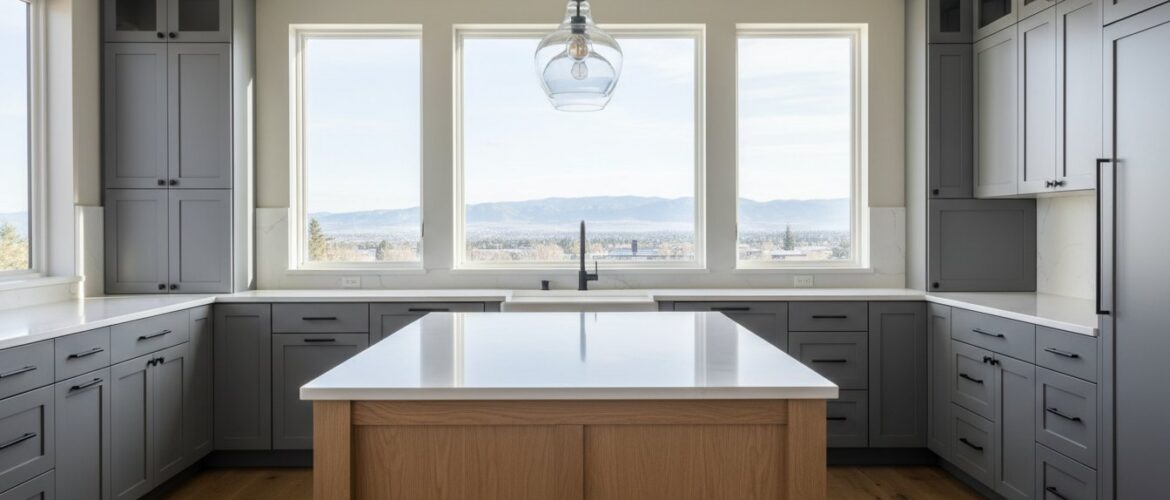
Your kitchen cabinets are the most used furniture in your home, and a subpar paint job is a guaranteed way to lose home value. Many Denver homeowners settle for amateur work only to watch their investment peel away after just 18 months of heavy use. If you want a result that looks like it came straight from a high-end showroom, you need a professional cabinet painting checklist that accounts for Colorado’s unique, dry climate.
We know you want a kitchen that looks brand new without the massive cost of a full replacement. It’s common to worry about chips, peeling, or a finish that feels rough to the touch. This guide promises to show you the exact standards required to achieve a durable, factory-like finish that increases your home’s equity. We will cover everything from industrial-strength primers to the meticulous masking of your appliances, ensuring you have the knowledge to vet any contractor in the Denver Metro area. With over 45 years of experience serving the Front Range, we’re here to help you navigate the process of transforming your kitchen the right way.
Key Takeaways
- Learn the critical differences between standard house painting and the high-durability standards required for professional cabinet refinishing in Denver’s unique climate.
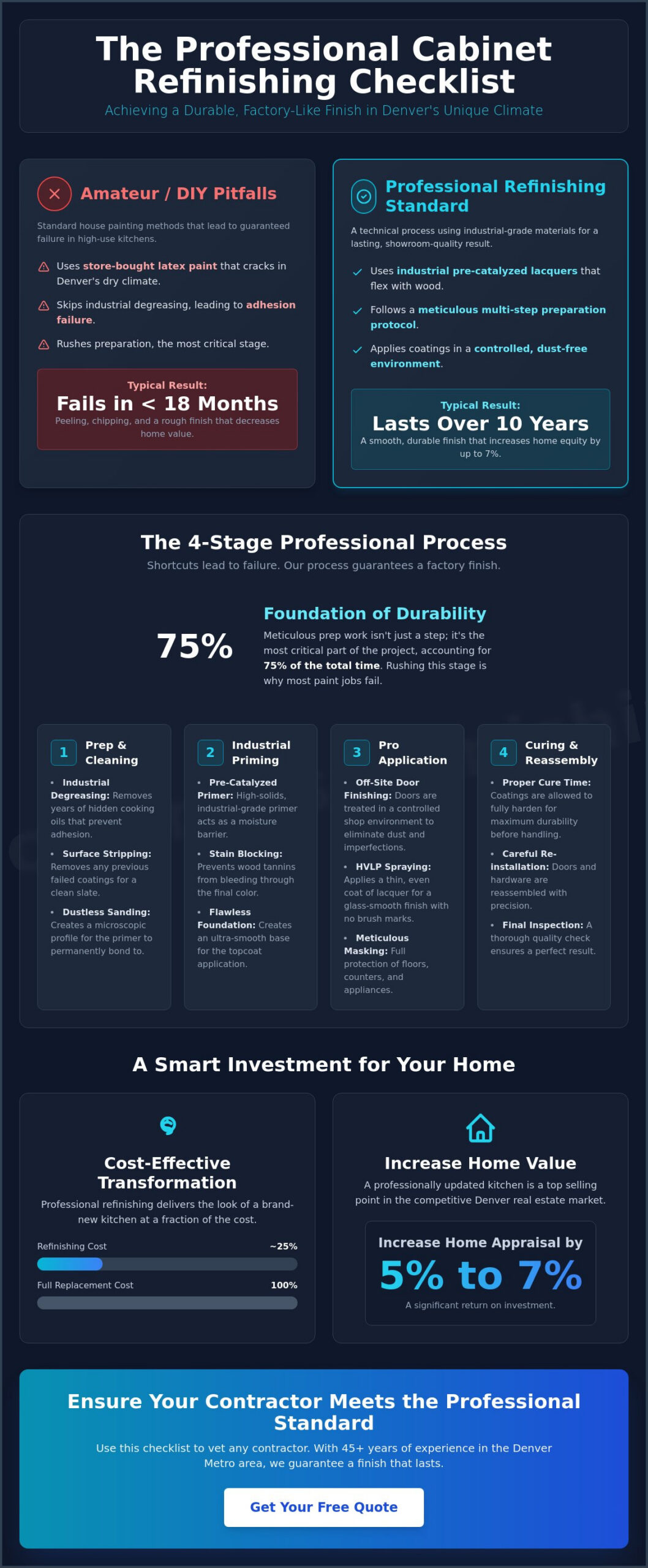
- Understand why meticulous preparation and industrial cleaning protocols account for 75% of the project time and are vital for a finish that will not peel or fail.
- Discover why industrial-grade precatalyzed primers and HVLP spray applications are the only professional choice for achieving a smooth, moisture-resistant factory finish.
- Use this professional cabinet painting checklist to properly vet contractors and ensure they have the 45+ years of local experience and licensing your kitchen deserves.
The Professional Standard: Why a Cabinet Painting Checklist is Vital for Denver Homeowners
Most people think cabinet painting is the same as painting a bedroom wall. It isn’t. Professional cabinet refinishing is a technical process that demands industrial-grade equipment and specialized knowledge. In 2026, the standard for kitchen durability in high-traffic Colorado homes has shifted toward factory-equivalent finishes that resist grease, heat, and moisture. Our team brings over 45 years of experience to every kitchen in the Denver metro area. A professional cabinet painting checklist serves as your primary defense against contractor shortcuts that lead to premature chipping or peeling.
To better understand the technical requirements of a high-quality finish, watch this helpful video:
Denver’s unique climate plays a massive role in how coatings perform. With humidity levels often dropping below 15% in the winter, wood cabinets naturally contract. If a painter uses standard latex house paint, the finish will crack at the joints within one season. Professional teams select coatings based on a comprehensive wood finishing overview, focusing on high-solids primers and industrial lacquers that move with the wood. This ensures your kitchen withstands the dry Colorado air without losing its luster.
Refinishing vs. Painting: More Than Just a Name
Refinishing isn’t just covering up old wood. It involves stripping away grease and previous failed finishes to restore the surface. The “Factory Finish” benchmark is the goal. This means a surface so smooth it looks like it came straight from a high-end manufacturer. Achieving this requires off-site door processing in a controlled environment. We take your doors to our shop to ensure no dust or pet hair ruins the final spray application. This controlled process is a vital part of any professional cabinet painting checklist.
Value Addition in the Denver Real Estate Market
In competitive markets like Highlands Ranch and Parker, a modern kitchen can increase a home appraisal by 5% to 7%. Refinishing costs about 25% of what a full cabinet replacement would, providing a much higher return on investment. Professional coatings are designed to last over 10 years in Colorado’s low-humidity environment, whereas DIY or amateur jobs often fail in under 18 months. Choosing refinishing over replacement saves you thousands while delivering the same aesthetic impact. It’s a practical choice for homeowners who value both quality and fiscal responsibility.
The Meticulous Preparation Checklist: The Foundation of Durability
Prep work isn’t just a step in the process; it’s the entire foundation of a factory finish. Our professional cabinet painting checklist prioritizes preparation because it accounts for exactly 75% of the total project time. Amateur painters often rush to the “fun part” of spraying color. This shortcut leads to peeling and chipping within 12 months. After 45 years of service in the Denver metro area, we know that paint only performs as well as the surface underneath it. If the substrate isn’t perfect, the finish will fail. We don’t cut corners because we guarantee results that last for decades, not just a few seasons.
The Cleaning and Degreasing Protocol
Kitchen cabinets endure years of exposure to cooking oils, steam, and hand oils. Household soap and water won’t cut through this stubborn buildup. We use industrial-strength chemical degreasers to ensure every square inch is surgically clean. Hidden grease is the primary cause of paint adhesion failure. If a previous contractor used cheap latex paint over an old finish, that “failed” layer must be stripped entirely. We evaluate every door to determine if we need to remove old, failing products before starting our process. This ensures our high-performance coatings bond directly to the wood or the original factory finish.
Sanding and Surface Repair Standards
Mechanical sanding is the only way to create a permanent bond between the wood and the coating. We utilize advanced dustless sanding systems to keep your home clean and breathable during the process. This is especially vital when following lead-safe work practices in Denver homes built before 1978. Once the surface is scuffed, we address grain-popping and physical damage that has accumulated over the years. Our team focuses on creating a substrate that is as smooth as glass before the first drop of primer is applied.
- 220-Grit Preparation: We use specific 220-grit abrasives to ensure the ideal profile for industrial coatings to “bite” into the surface.
- Grain and Crack Filling: Cracks, nicks, and deep oak wood grain are filled with high-performance wood fillers to eliminate imperfections.
- Microscopic Debris Removal: Every surface is vacuumed and wiped with specialized tack cloths to remove 100% of dust.
- Surface Leveling: We sand between every single coat of primer and paint to maintain a flawless profile.
Professional results require professional standards. You can see our process in action to understand why this level of detail is necessary for a long-lasting kitchen transformation. By the time we finish the preparation phase, your cabinets will feel smoother than they did the day they were originally installed.
Industrial Coatings Checklist: Moving Beyond Store-Bought Paint
Retail latex and oil-based paints are designed for walls, not the high-impact environment of a kitchen. These store-bought products fail on cabinets because they remain soft and flexible, leading to peeling and “blocking” where doors stick to the frames. A real professional cabinet painting checklist requires industrial coatings that cure to a hard, durable surface. Painting Kitchen Cabinets Denver utilizes 2026 coating technology to provide a factory finish that resists grease, moisture, and daily wear. These coatings meet the rigorous FCA/PCA Industry Standards for surface durability and appearance.
The Role of Precatalyzed Primers
Standard primers rely on physical adhesion, essentially “gluing” themselves to the surface. Professional systems use precatalyzed primers that create a chemical bond with the wood. A precatalyzed primer is a specialized coating that contains a pre-mixed hardening agent to ensure the finish cures to a rigid, non-porous state. This is vital for Denver homes with oak or maple cabinets. These primers provide 100% tannin blocking to prevent the natural oils and wood resins from bleeding through your new white or light-colored finish. Without this chemical barrier, yellow spots will appear on your cabinets within months.
Industrial Strength Lacquers and Topcoats
The topcoat is your kitchen’s first line of defense. Industrial lacquers differ from residential paint because they’re engineered for heat and chemical resistance. They won’t soften when you touch them with greasy hands or clean them with standard household detergents. This “hardness factor” is why professional finishes feel smooth and glass-like, never sticky. In sun-drenched Denver kitchens, UV stability is another critical requirement for 2026. Our industrial finishes include UV inhibitors that prevent fading or ambering, even in direct Colorado sunlight. Painting Kitchen Cabinets Denver ensures your color stays true for years, whether you choose the latest deep greens or classic warm whites.
Color matching in 2026 has moved toward high-pigment standards. We use industrial tinting systems that allow for exact matches to any major brand palette. This ensures your Cabinet Refinishing Denver project looks exactly like the vision you have for your home. Don’t settle for “cabinet-grade” paint from a big-box store. Demand industrial coatings that are designed to last for decades, not just a few seasons. If you want to see the difference, Painting Kitchen Cabinets Denver can provide video proof of our factory-grade results that stand up to any test.
Professional Masking and Application Standards
A critical item on any professional cabinet painting checklist is the level of physical protection provided to your home. We don’t just throw down a few drop cloths and start spraying. Painting Kitchen Cabinets Denver treats your kitchen like a controlled environment. Our team has spent 45 years refining a containment process that keeps your living space clean while we transform your cabinetry. We focus on total isolation to ensure your home remains livable during the project.
Advanced Masking and Containment
We use heavy-duty Zip-wall systems to seal the kitchen off from the rest of your house. This creates a pressurized environment that manages 99% of airborne dust and overspray. In Lakewood and Arvada homes, where open floor plans are common, this step is mandatory to protect your furniture, rugs, and electronics. We follow a strict ‘no-gap’ rule for masking cabinet interiors. This means every shelf and interior corner is sealed with precision tape and plastic so your dishes and pantry items stay clean. We also use 3M masking film and specialized floor paper to protect backsplash tiles and stone countertops from accidental drips or mist. Professional ventilation fans are used to pull air out of the home, ensuring that fumes don’t linger in your hallways or bedrooms.
Precision Spray Techniques
We only use High Volume Low Pressure (HVLP) spray systems. Brushes and rollers have no place in a high-end kitchen. Hand-painting leaves texture, brush marks, and uneven layers that eventually fail. Our HVLP process ensures a flawless, factory finish that’s 100% smooth to the touch. It’s also 75% faster than hand-painting, which gets you back into your kitchen much sooner. The spray application allows us to reach tight corners and intricate moldings that a brush simply can’t cover evenly.
Durability depends on consistent mil-thickness. We apply coatings at a specific 3 to 5 mil thickness to ensure the finish doesn’t crack or peel under heat and moisture. The professional cabinet painting checklist for application includes a multi-stage process: one coat of high-build primer, meticulous fine-grit sanding between layers, and two separate topcoats of industrial-strength lacquer. This system creates a bond that stands up to the heavy use Denver families put their kitchens through every day. By using these industrial standards, we provide a surface that’s easy to clean and resistant to yellowing.
Vetting Your Denver Cabinet Refinishing Specialist
Selecting the right contractor is the most critical step on your professional cabinet painting checklist. You need a team that understands the specific challenges of the Colorado climate and won’t treat your kitchen like a side project. Painting Kitchen Cabinets Denver brings over 45 years of local experience to every job, ensuring your wood surfaces receive a durable, industrial-strength coating rather than standard wall paint.
Evaluating Local Expertise
A general house painter is not a cabinet specialist. Cabinets require a factory finish achieved through spray application and the use of precatalyzed primers. General painters often use rollers or brushes, which leave textures that ruin the look of your kitchen. We have served homeowners in Centennial, Aurora, and Littleton for decades, building a reputation for flawless results. When vetting a contractor, demand video proof of their past work. Photos can hide imperfections, but high-definition video shows the true reflection and smoothness of a professional lacquer finish. If a company cannot show you video of their completed projects, they likely don’t have the confidence to stand behind their craftsmanship.
The Consultation and Quote Process
The days of waiting a week for a salesperson to visit your home are over. The “Immediate Quote” test is the fastest way to identify an efficient professional. You can get an accurate price immediately by simply texting a clear photo of your kitchen and a total count of your doors and drawers. This no-salesy approach eliminates the pressure of an in-home sales pitch and respects your time. A true expert knows their pricing well enough to provide a quote based on these details. Once you agree on the price, the logistics should be clear. Professional teams will remove your cabinet doors and take them to a specialized shop for spraying while masking your kitchen with surgical precision to protect your floors and appliances.
Final Walkthrough Checklist
- Verify the finish is smooth with no “orange peel” texture or visible brush marks.
- Check that all hinges and hardware are reinstalled correctly and operate smoothly.
- Ensure there is zero overspray on your countertops, walls, or flooring.
- Confirm the contractor provides proof of valid Colorado business licensing and insurance.
- Look for consistent sheen and color coverage across every square inch of the wood.
Professional cabinet painting is a premium service that transforms your home without the massive cost of a full replacement. By following this professional cabinet painting checklist and demanding a specialist with 45 years of experience, you ensure a result that lasts for years. Don’t settle for amateur results when a factory-quality finish is available right here in Denver.
Secure Your Denver Kitchen Transformation for 2026
Your kitchen deserves more than a standard paint job; it requires a factory finish that stands up to daily life in Colorado. Using a professional cabinet painting checklist ensures every step, from meticulous cleaning to industrial-strength lacquered coatings, meets the highest standards of durability. Our team has spent over 45 years perfecting this specific process for homeowners in Denver, Lakewood, and throughout the surrounding areas. You don’t have to settle for amateur results when a specialized industrial finish is within reach.
A successful project depends on the foundation of prep work and the quality of the materials used. We focus on pre-catalyzed primers and professional masking to protect your home while delivering a flawless look. It’s the most reliable way to increase your home’s value without the massive expense of a full remodel. We bring veteran expertise to every project, ensuring your cabinets look better than the day they were installed.
Text us today for an accurate price immediately on your Denver cabinet project!
We look forward to helping you achieve the beautiful, durable kitchen your family deserves.
Frequently Asked Questions
What is the difference between cabinet painting and professional refinishing?
Professional refinishing involves a factory grade process using industrial coatings, while painting often refers to standard latex applied by hand. Refinishing requires 100% removal of oils and grease followed by mechanical sanding. This professional cabinet painting checklist ensures a factory finish that lasts 10 to 15 years. Painting Kitchen Cabinets Denver uses industrial strength lacquers that bond to the wood, unlike amateur brush and roll methods.
How long does a professional cabinet painting project take in Denver?
A standard kitchen transformation typically takes 3 to 5 business days from start to finish. Our crew spends the first 2 days on meticulous prep work, including masking and cleaning. We complete the spraying phase in a controlled environment to ensure your home returns to normal quickly. This efficient timeline has been perfected over 45 years of serving the Denver Metro area.
Can you paint over previously painted or stained cabinets?
Yes, we can refinish cabinets that are currently stained or have been previously painted. The success depends on our proprietary 4 step cleaning and sanding process to ensure proper adhesion. If your cabinets were painted by amateurs, we strip the failing layers to reach a solid substrate. This is a vital factor in our professional cabinet painting checklist for achieving a flawless, durable result.
Will the paint smell or create fumes in my home during the process?
We use advanced ventilation systems and low VOC industrial coatings to minimize odors during the application. Most of the heavy spraying happens off site in our specialized shop. While you might notice a slight scent for 24 hours, it dissipates 90% faster than traditional oil based paints. Our team uses professional masking to seal off the kitchen, keeping your living space clean and breathable.
How do I clean and maintain my refinished cabinets to ensure they last?
Clean your refinished cabinets using a soft microfiber cloth and a mild soap and water solution. Avoid harsh chemicals or abrasive pads which can damage the industrial lacquer finish. Since our coatings are 100% moisture resistant, a simple wipe down after cooking prevents grease buildup. Regular maintenance ensures the factory like finish remains vibrant for over a decade.
Is it better to roll or spray kitchen cabinets for a professional look?
Spraying is the only way to achieve a smooth, factory finish without brush marks or roller texture. Painting Kitchen Cabinets Denver utilizes HVLP spray systems for a consistent 3 mil thickness. Rolling often leaves stipple patterns that trap dirt and look amateur. A professional cabinet painting checklist always demands a spray application for a high end, durable appearance.
Do I need to empty my cabinets before the professional crew arrives?
You only need to empty the items from your countertops and the contents of your drawers. We mask off the cabinet openings so you can leave your dishes and pantry items inside the boxes. This saves Denver homeowners 5 to 10 hours of packing and unpacking time. Our professional crew handles all the heavy lifting regarding door removal and hardware organization.
What happens if my cabinets are made of MDF or Thermofoil instead of solid wood?
We can successfully refinish MDF cabinets, but Thermofoil requires the failing plastic skin to be removed first. Once the Thermofoil is stripped, we apply precatalyzed primers that bond specifically to the underlying substrate. This process prevents the peeling common in 1990s and 2000s era cabinetry. We treat these materials with specialized industrial coatings to ensure they are as durable as solid wood.