
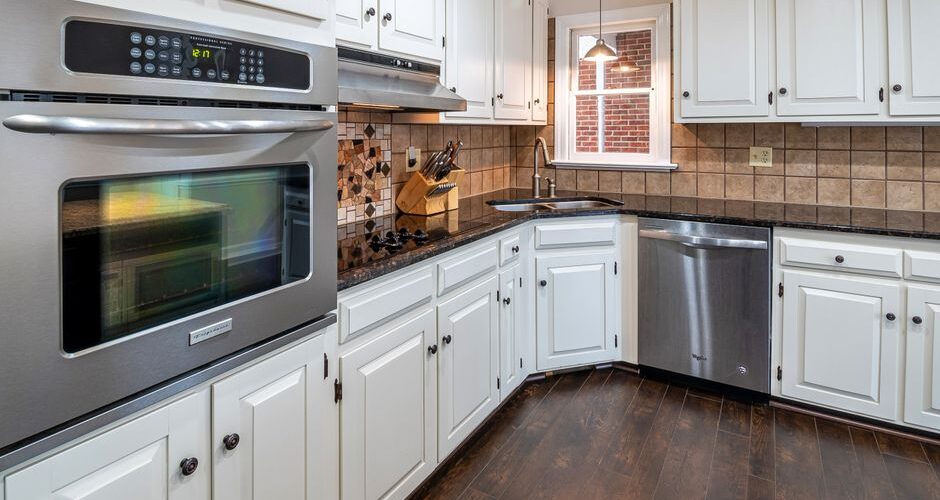
A five-star average on a Denver cabinet refinishing company’s profile feels like an answer. It is really just a starting point. The number tells you that some people were happy enough to click five stars, but it does not tell you what was refinished, how many doors were involved, how the finish held up after a Colorado winter, or whether the crew ever came back to fix a punch list item. Those details live in the text of the reviews, not in the star count, and reading them well is the difference between hiring a finisher and hoping for the best.
This guide is about how to read those reviews like someone who has done it before. What phrases signal a real, detailed account. What words should slow you down. And what to ask on the phone once you have finished reading.
Why a Five-Star Average Tells You Less Than You Think
Star ratings compress a whole project into a single click. A review written the day the last door went back on the hinges captures relief and relief only. It says nothing about how the finish looks after a year of cooking grease, steam from the dishwasher, and kids slamming the corner cabinet. It also says nothing about whether the price held, whether the crew protected the floors, or whether the company answered the phone three months later.
That is not a knock on reviewers. Most people write a review in the first flush of a finished kitchen. Your job as a reader is to find the reviews that go past that first flush, the ones with enough specific detail that you can picture the job. A handful of those is worth more than fifty generic five-star entries.
The Details That Separate a Real Review From a Placeholder
Look for reviews that would be difficult to write without having actually been on site. Those are the ones that give you something to compare against the next company you call.
Reviews that describe the process, not just the result
A refinishing job involves real steps: doors come off, surfaces get sanded and primed, and the finish gets sprayed on rather than brushed or rolled. When a reviewer mentions that sequence, or mentions spray application specifically, you know they watched the work happen and understood what they were paying for. A review that says only “great job, beautiful kitchen” could have been written about a plumber.
Reviews that mention scale
One Denver-area review describes a kitchen with roughly 72 cabinets that came out well. That single detail tells you something a star rating cannot: the company handled a large, door-heavy job and the customer was still happy at the end. If your kitchen is small, that is reassuring rather than discouraging. A crew that manages 72 doors without losing the thread can usually manage 20.
Reviews that mention the finish after time has passed
The most valuable review is the one written a year or two later. It answers the question you actually care about. Did the paint hold up around the handles? Did the doors still close cleanly? Did anything chip near the sink? Spray-applied finishes are marketed on the absence of drips, streaks, and peeling, so when a long-term reviewer uses those words, either to praise or to complain, pay attention. That is the finish conversation happening in public.

Red Flags That Hide Inside Glowing Reviews
Sometimes the warning is buried in a paragraph that starts positively. A Denver-area review roundup puts it plainly: if reviews mention chipping, long delays, or unfinished punch lists, be cautious. Those three words are worth searching for on any company profile before you call.
- Chipping. A finish that chips early usually points to prep that got rushed. Ask what the prep process includes and whether it is written into the estimate.
- Long delays. Every trade has a bad week. A pattern of delays across multiple reviews is different from one unlucky job.
- Unfinished punch lists. Small items left open for weeks tell you more about follow-through than any promise made on the phone.
There is a second category of warning that shows up in Denver cabinet refacing and refinishing discussions. Watch for vague material descriptions, no written warranty, and pressure to sign quickly. All three are signs of a lowball offer that will cut corners somewhere later. When a review mentions a company being pushy about a deposit, or mentions that the paint product was never named, treat that as information about how the whole job will run.
Two more patterns worth noticing. Reviews that read almost identically, with the same phrasing and the same length, are a sign of a cleanup effort rather than a track record. And a company that argues with every negative review in public is telling you something about how it will handle your call if something goes wrong.
What Denver Reviewers Praise When the Work Goes Well
Local roundups of Denver cabinet services tend to name the same qualities. Cabinet Restoration, described as a family-owned business with more than 25 years in the trade, and 5280 Cabinet Coatings both draw high praise for quality finishes and customer satisfaction. Nationwide operations with Denver branches, such as N-Hance, lean on 20 or more years of refinishing experience and certified local professionals. Different business models, same review vocabulary.
That convergence is useful. When reviewers across several companies all praise smoothness, cleanliness, and communication, those are the standards you can hold every bidder to. When reviewers across several companies all complain about the same thing, that complaint is probably structural rather than personal.

A Quick Table for Reading Review Signals
| What you see in a review | What it may mean | What to ask before hiring |
|---|---|---|
| Detailed process description (sanding, priming, spraying) | The reviewer understood what they paid for | Walk me through your prep and application steps |
| Mentions a large cabinet count | The crew handled a big, door-heavy job | How many doors is typical for you in a week |
| Mentions chipping or peeling | A possible prep or product problem | What product do you spray, and what is the warranty |
| Mentions delays or open punch lists | Follow-through may be weak | How do you handle warranty callbacks |
| Mentions vague materials or pressure to sign | A lowball quote cutting corners later | Put materials, timing, and warranty in writing |
Where to Look Beyond a Single Company Profile
Do not stop at the review widget on the company’s own site. Company sites show what the company wants you to see, and photos with a before-and-after slider are marketing, not evidence. Broaden out to the places where people ask questions in their own words.
Local question threads are especially useful, because homeowners tend to describe their situation honestly. You will find people weighing refinishing against replacing, people asking for recommendations near Centennial, and people comparing refacing quotes around Broomfield. Those threads give you a sense of what neighbors actually paid attention to, and what they wish they had asked first. Social video posts from refinishing crews are worth a look too, since a video of a spray finish being applied is harder to fake than a testimonial.
Read across at least three sources. A company with a strong profile on one platform and a thin presence everywhere else is not necessarily bad, but a company with consistent, detailed praise across several sources has earned something real.

Questions to Ask Once You Have Finished Reading
Reviews prepare you to ask better questions. Use them. A short list that covers the gaps reviews leave open:
- What exactly is included in the quoted price, and what would add cost?
- Which product goes on the cabinets, and how many coats?
- Is the warranty written, and what does it actually cover?
- How long will my kitchen be unusable, and who moves the doors?
- Can you share two recent local jobs I can compare to mine?
Write down the answers as you get them. Three bids later, the notes are what you will rely on, not memory. The company that answers all five without hedging is usually the one whose reviews you were already reading with confidence.
Frequently Asked Questions
How many reviews should I read before deciding?
Read enough to see patterns rather than isolated events. A useful threshold is a dozen recent reviews across two or three platforms, with at least three that go into real detail about the work. One scathing review among fifty detailed positive ones reads differently than three complaints about the same problem.
Should I trust a company with only five-star reviews?
Be curious about it. Any business that has run for years will collect the occasional three-star review, and a profile with none at all can mean curation. Look at how the company responds to criticism where it exists, and ask directly how it handles warranty callbacks if a finish fails.
What does a review mentioning “punch list” mean?
A punch list is the running list of small fixes left at the end of a job, such as a door that needs adjusting or a touch-up near a hinge. When reviewers mention an unfinished punch list, it usually means the crew wrapped up and moved on before the details were closed out. Ask how the final walkthrough works.
Are reviews from other cities useful for a Denver kitchen?
Partly. A nationwide company’s reviews from other markets tell you about process and product consistency, and a Denver-area branch with 20 or more years of refinishing experience behind it is a reasonable signal. Local reviews still matter more, because climate, humidity swings, and housing stock all affect how a finish behaves in a Colorado kitchen.