
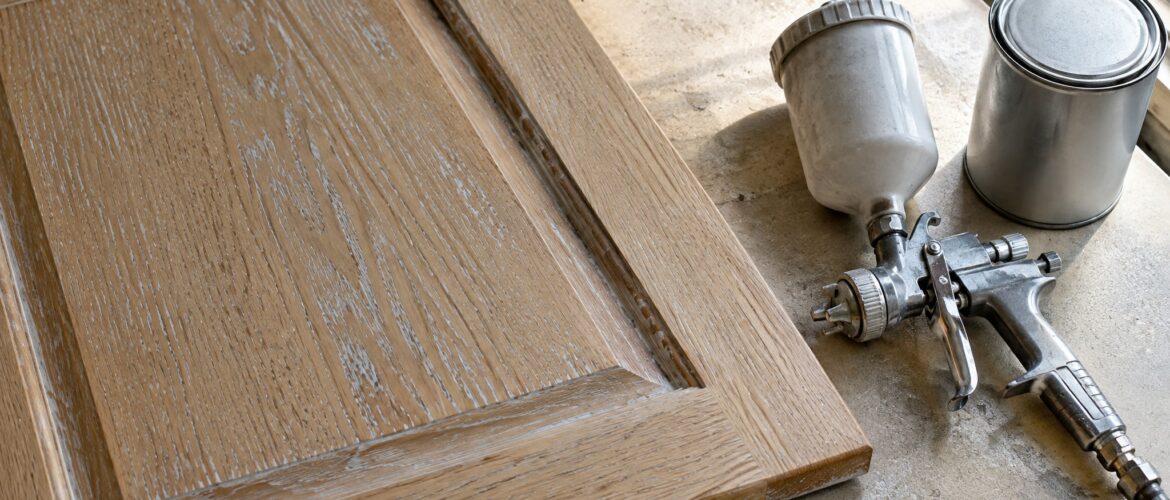
Achieving a factory-smooth finish on oak cabinets takes more than good paint or a steady hand with a brush. Oak is an open-grain hardwood with deep pores that resist smooth film formation. That’s why grain filling is the single most critical step in any refinishing job where texture isn’t acceptable.
Our shop has refined oak cabinets in Denver since 1979 using HVLP spray equipment and precat primer with crosslinking urethane lacquer. We’ve never brushed or rolled paint on a cabinet door. Skip the prep work and you guarantee failure in Colorado’s dry climate. You might get quotes promising a smooth look without mentioning grain filling anywhere. Those estimates describe a paint job, not a refinish.
Professional cabinet refinishing typically saves homeowners about 70% compared to a $25,000+ full replacement job. But that number only holds when the process includes the labor-intensive steps that actually turn open-grain wood into a glass-like surface. Below, we explain why grain filling separates a textured paint job from a durable factory finish, how 2K poly chemistry supports that outcome, and what to check on any quote before you sign it.
Why Grain Filling Defines the Factory-Smooth Look on Oak Cabinets
Oak’s cellular structure has thousands of microscopic pores per square inch that stay open even after sanding. No amount of paint bridges that gap permanently. If you want a solid white or light gray finish on honey-oak cabinets with zero visible texture, the refinisher has to fill every pore flush with the surrounding wood before any color or topcoat touches the door. That’s not a cosmetic upgrade. It’s a structural requirement for the film to hold, because coatings applied over unfilled oak look smooth at first and then stop looking smooth as the humidity swings.
Here’s a scenario we see constantly in Denver homes: a homeowner wants to turn dated honey-oak cabinets into a crisp white conversion varnish finish. Skip grain filling, and the 2K poly or crosslinking urethane lacquer bridges the open pores on the first coat, which looks fine for a while. But it leaves hollow voids under the surface film. Homeowners who skip grain filling on oak often see shadow lines or cracking within months, even after multiple coats, as the wood moves in Denver’s low-humidity air. The coating has no continuous substrate underneath it, so it fractures along the pore boundaries as the wood expands and contracts with the seasons.
The correct process starts with a solvent-based or high-solids grain filler made for open-grain hardwoods, worked deep into the pores with a squeegee or stiff card rather than wiped across the surface. Once the filler cures, we sand back to bare wood level, stripping the excess above the pore line while leaving the filled channels flush. Only then does precat primer go on, sealing the tannins and giving a uniform base for HVLP spraying. The 2K poly or crosslinking urethane lacquer goes on at calibrated air-to-fluid ratios so it flows out properly instead of drying rough.
You can’t skip this sequence on oak by adding extra coats of paint or primer. Each additional layer just builds thickness above the pores; it does nothing about the voids underneath. That labor is exactly why professional refinishing gets results DIY methods can’t touch, and why you should be skeptical of any quote that leaves grain filling off the list. If a contractor’s estimate doesn’t list grain filling as its own line item with its own labor cost, they’re pricing a standard paint job. You’ll get textured results no matter how many topcoats they spray.
Ask any refinisher about their grain filling protocol before you sign anything. A shop that knows oak will walk you through the filler type, application method, sanding steps and inspection criteria without hesitating. A contractor who treats oak like closed-grain maple or MDF will dodge the question or claim their paint is thick enough to fill pores on its own. Checking what defines a top-rated refinisher in Denver helps you tell shops that specialize in open-grain hardwoods apart from general painters who don’t have the equipment or the chemistry knowledge for a factory-smooth result.
The price gap between grain-filled refinishing and standard painting reflects real labor hours, not markup. Reviewing the cost per door for 2K poly and HVLP refinishing gives you a realistic baseline for what proper oak treatment runs today, so you don’t accept a suspiciously low quote that’s cutting corners on prep.
2K Poly vs Textured Finishes: Choosing the Right Sheen for Denver Homes
Some homeowners want oak’s natural character to show through the finish. That’s a valid choice, but it comes with different technical expectations than factory-smooth refinishing. Go textured, and the refinisher skips grain filling and sprays fewer build coats, so the surface stays tactile and shows pore patterns under raking light. This approach still benefits from 2K poly or crosslinking urethane lacquer chemistry, because durability and chemical resistance matter in a kitchen no matter which look you choose.
Whether you end up smooth or textured comes down entirely to grain filling during prep, not the topcoat product or the number of coats sprayed. Specifying 2K poly alone won’t get you a factory-smooth result if the oak pores underneath are unfilled. And you can’t fill the grain and then sand it back open and call that intentional texture. This is a design decision, not a place to cut cost: skipping grain filling to save money while expecting a smooth result gets you neither.
Without precise adjustments to air-to-fluid ratios during HVLP spraying, 2K poly finishes on oak can develop a textured dry spray look instead of flowing out into a factory-smooth film. Equipment calibration matters as much as prep. Tell your refinisher up front which look you want, so they can adjust both the prep scope and the spray settings instead of you finding out after the fact that the finish doesn’t match what you pictured. Viewing portfolios where you can see actual oak cabinet refinishing results helps confirm a shop’s smooth and textured work both hold up before you commit to either one.
Both finish types protect well against moisture, heat and cleaning chemicals when a shop applies them correctly with professional-grade chemistry. Durability shouldn’t drive the texture decision. Whether you show the oak grain or hide it comes down to how you want your kitchen to look and feel every day, and both deserve the same care during application.
What Separates Professional Oak Refinishing from Standard Painting
Factory-smooth results on oak need equipment and chemistry that general painting contractors usually don’t have. HVLP spray systems, calibrated for the right air-to-fluid ratio, atomize 2K poly and crosslinking urethane lacquer into fine droplets that flow together on a prepared surface. Brushes and rollers leave streak marks and stipple on open-grain wood that no amount of skill fixes. Precat primers seal oak tannins that would otherwise bleed through lighter finishes over time and leave yellow or brown discoloration on a finish you paid to look clean.
Crosslinking urethane lacquers and 2K polys cure through a chemical reaction rather than simple evaporation, so they form hard, furniture-grade films that resist chipping, scratching and household chemicals far better than conventional paint. Brushed or rolled coatings can’t reach that level of smoothness on open-grain wood, and that’s about how the tools deposit material, not the painter’s skill. Judge every refinishing quote on whether grain filling and HVLP spray application are listed as specified steps, not just described vaguely as “painting” or “refinishing.”
Refinishing oak cabinets isn’t a weekend refresh, and it’s not for anyone willing to live with visible brush marks or orange peel texture to save money. It takes specialized equipment, a controlled environment and a multi-day curing schedule, none of which fits a DIY timeline or a budget-painting job. Knowing that going in saves you the disappointment later.
Frequently Asked Questions
How do I hide wood grain when painting oak cabinets?
Hiding oak grain requires applying a solvent-based or high-solids grain filler into the open pores, sanding it flush with the surrounding wood, and sealing with precat primer before spraying 2K poly or crosslinking urethane lacquer via HVLP equipment. Adding extra paint coats without dedicated grain filling will not produce a smooth surface because the coating bridges pores temporarily but cracks as the wood moves seasonally.
What grain filler works best for oak cabinets?
Solvent-based or high-solids grain fillers specifically formulated for open-grain hardwoods perform best because they penetrate deeply into oak pores and cure hard enough to sand flush without shrinking. Water-based fillers often shrink excessively in oak’s deep pore structure, requiring multiple applications and still risking telegraphing through the final finish.
Can I restain oak cabinets darker instead of painting them?
Yes, oak accepts darker stains readily because its open grain absorbs pigment evenly, though achieving uniform color requires stripping existing finish completely and potentially using a pre-stain conditioner to prevent blotchiness. Darker stains still benefit from grain filling if you want a smoother surface feel, as stain alone does not fill pores or create a protective film.
What mistakes ruin painted oak cabinet finishes?
Skipping grain filling is the most common failure point, causing shadow lines and cracking within months as oak expands and contracts in dry climates. Other critical errors include using brushed or rolled application instead of HVLP spraying, failing to seal tannins with precat primer, and applying conventional paint instead of chemically curing 2K poly or crosslinking urethane lacquer.